
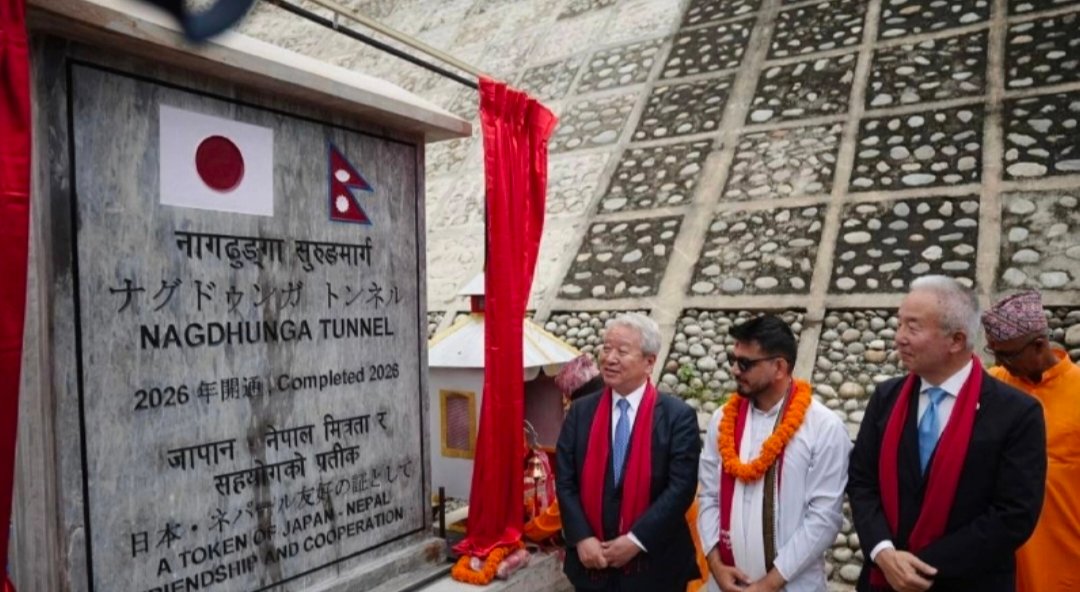
KATHMANDU: Nepal has officially inaugurated its first modern road tunnel, the 2.68-kilometre Nagdhunga–Sisnekhola Tunnel, marking a historic milestone in the country’s transport infrastructure after nearly seven years of construction.The tunnel was inaugurated on Monday by Minister for Infrastructure Development Sunil Lamsal in the presence of Japanese Ambassador to Nepal Maeda Toru and Japan International Cooperation Agency (JICA) President Dr. Akihiko Tanaka. Following the ceremony, the project was formally handed over to the Government of Nepal.
The tunnel will initially be opened only for emergency vehicles, including ambulances and security forces, as part of a testing phase. After successful trials, it will be gradually opened to private and public vehicles. No toll will be charged during the testing period.Connecting Dahachok in Kathmandu’s Chandragiri Municipality with Sisnekhola in Dhading’s Dhunibesi Municipality, the tunnel is expected to reduce travel time on the heavily congested Nagdhunga route by nearly one hour, significantly improving connectivity between Kathmandu Valley and western Nepal.The project includes a 2.68-km main tunnel and a 2.56-km emergency rescue tunnel, equipped with advanced safety features such as CCTV surveillance, fire-fighting systems, emergency communication facilities, ventilation systems and dedicated evacuation routes.
Authorities said pedestrians, motorcycles, three-wheelers and vehicles carrying fuel, gas, explosives or other flammable materials will not be permitted to use the tunnel. Once fully operational, toll charges will be introduced, with separate rates for cars, buses, trucks and other heavy vehicles.Construction of the landmark project began after the foundation stone was laid by then Prime Minister KP Sharma Oli on November 21, 2019. Although originally scheduled for completion within 42 months, the project faced delays due to the COVID-19 pandemic, compensation issues and other construction-related challenges.
Built by Japan’s Hazama Ando Corporation, the tunnel was financed through concessional loans from the Japanese government along with investment from the Government of Nepal. The total project cost reached approximately Rs 29 billion, reflecting Nepal and Japan’s strong partnership in developing modern infrastructure.