

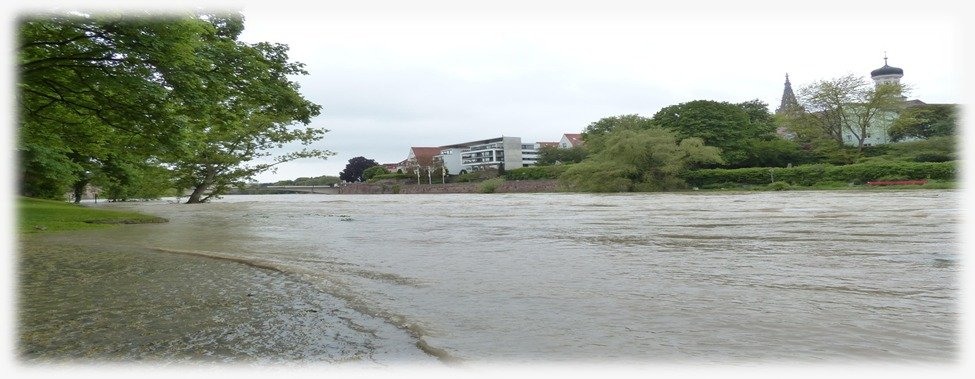
Cloudbursts represent one of nature’s most devastating and unpredictable meteorological phenomena, characterized by sudden, intense precipitation in a localized area over a short period. These extreme weather events can release hundreds of millimeters of rainfall within minutes to hours, triggering catastrophic flash floods, landslides, and infrastructure damage. In recent decades, the frequency and intensity of cloudburst events have increased globally, with mountainous and semi-arid regions particularly vulnerable to their destructive impacts.
The cloudbursts remain inherently difficult to predict, implementation of comprehensive science-based early-warning systems is essential to mitigate their devastating consequences and protect vulnerable populations in susceptible regions.Cloudbursts occur when atmospheric conditions align to produce extreme precipitation in a short timeframe, typically lasting between 15 minutes and several hours. Unlike conventional rainfall, which is distributed across large geographical areas, cloudbursts concentrate massive amounts of water in localized zones, overwhelming drainage systems and soil infiltration capacity.
The meteorological mechanisms driving cloudbursts involve the convergence of moisture-laden air masses, orographic lifting in mountainous terrain, atmospheric instability, and trigger mechanisms such as surface heating or wind shear. When these factors combine, they create supercell thunderstorms or mesoscale convective systems capable of producing rainfall rates exceeding 100 millimeters per hour.The consequences of cloudburst events extend far beyond immediate flooding. Flash floods resulting from cloudbursts erode riverbanks, destroy agricultural land, and obliterate homes and infrastructure within minutes. Secondary hazards including landslides, debris flows, and flash flooding often follow the initial cloudburst, compounding disaster impacts.
In mountainous regions, cloudburst-triggered flash floods can travel at velocities exceeding 5 meters per second, carrying boulders, trees, and debris that act as battering rams against structures and obstacles. The primary challenge in addressing cloudburst disasters stems from the extreme difficulty in predicting these events with sufficient accuracy and lead time to enable meaningful preparedness measures. Cloudbursts are characterized by small spatial scales, short temporal development windows, and high variability in their intensity and duration. Conventional meteorological models, which operate at grid resolutions of 10 to 50 kilometers, lack the spatial resolution necessary to predict localized extreme precipitation events that may affect areas smaller than a few square kilometers. Additionally, the short development time of cloudbursts often forming within 30 to 60 minutes-provides limited time for forecasters to issue warnings even when atmospheric conditions appear favorable for extreme precipitation.Current early-warning systems in many regions rely primarily on rainfall thresholds established from historical data, ground-based weather radar, and conventional meteorological forecasts.
While these tools provide valuable information about general atmospheric conditions, they frequently fail to detect impending cloudbursts until precipitation is already occurring. Ground- based weather radar, though useful for detecting active precipitation, may miss developing convective systems in areas with complex terrain or limited radar coverage. Furthermore, many regions vulnerable to cloudburst particularly in developing nations and mountainous areas lack adequate meteorological monitoring networks, making real-time detection of extreme precipitation events virtually impossible. This gap between atmospheric threat and forecasting capability creates a dangerous situation where populations in vulnerable areas have minimal warning before disaster strikes.
Addressing the cloudburst prediction challenge requires a multi-layered approach combining advanced meteorological technology, enhanced monitoring networks, and sophisticated data analysis techniques. High-resolution numerical weather prediction models, operating at grid resolutions of 1 to 4 kilometers, can better capture the localized atmospheric phenomena responsible for cloudburst formation. These models, when run frequently and updated with real- time observational data, show improved capability in detecting environments favorable for extreme precipitation. Advanced satellite technology, including geostationary satellites with enhanced temporal and spatial resolution, can provide continuous monitoring of atmospheric moisture, cloud development, and convective activity over vulnerable regions.Dense networks of ground-based observations constitute another critical component of improved early-warning systems. Automatic weather stations, rain gauges, and weather radar installations, when properly distributed across mountainous terrain, provide real-time data on atmospheric conditions and precipitation occurrence. Such networks enable rapid detection of rainfall intensification and initiation of warnings before significant impact occurs.
Additionally, now casting systems that integrate satellite, radar, and surface observation data can provide short-term precipitation forecasts (0 to 6 hours) with greater accuracy than conventional forecasts, giving communities critical additional minutes to initiate protective actions.Integration of artificial intelligence and machine learning techniques offers promising advancements in cloudburst detection and prediction. These computational methods can identify complex atmospheric patterns associated with historical cloudburst events and recognize similar patterns developing in real-time, potentially providing earlier warning signals. Furthermore, probabilistic forecasting approaches that communicate prediction uncertainty can help decision-makers understand risk levels and make more informed preparedness decisions.
Achieving effective early-warning systems for cloudburst disasters requires sustained commitment to meteorological infrastructure investment, international cooperation, capacity building in vulnerable regions, and integration of early-warming capabilities into comprehensive disaster risk reduction frameworks. While significant challenges remain, particularly regarding resource allocation in developing nations, the imperative to protect vulnerable populations from nature’s fury justifies these investments. As climate change continues to intensity extreme weather phenomena globally, the c urgency of strengthening early-warning systems for cloudbursts and other meteorological hazards becomes increasingly apparent.