
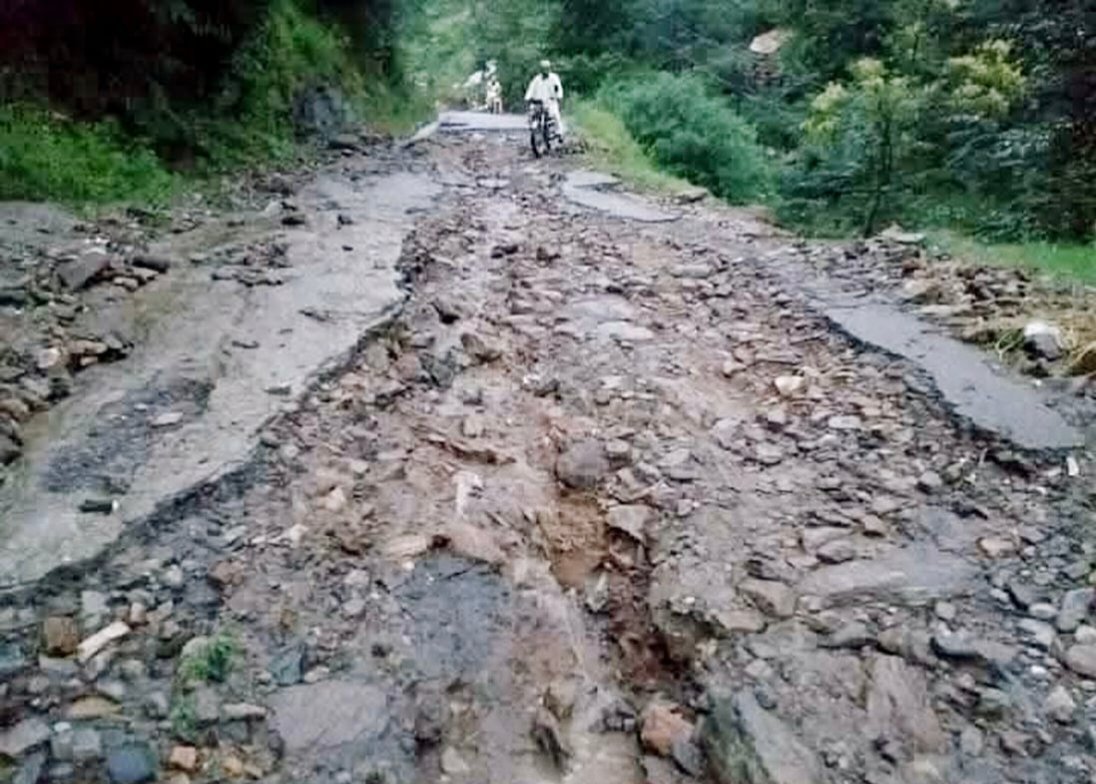
AFTAB HUSSAIN SHANGLA:A major road serving tens of thousands of residents in the upper parts of Shangla has deteriorated into a state of complete disrepair, leaving more than 40,000 people in severe distress and effectively cut off from essential services.
The road, which connects the areas of Ghorband, Mian Kalay, Pir Abad, Kas Pagorai, and Khet, is the only central artery for the region. However, years of neglect and lack of maintenance have reduced it to what locals describe as “a scene from a war-torn area rather than a civilized locality.”Residents say the road has reached a point where it is no longer safe or functional. Deep potholes, broken surfaces, eroded structure, and scattered debris have made travel extremely dangerous. Following recent heavy rains, large sections of the road have turned into muddy tracks, further worsening the already dire situation.Locals expressed deep anger and frustration, stating that this road is their “lifeline,” yet it has now become a source of constant suffering. The situation has particularly impacted vulnerable groups, including patients and students.
Transporting the sick to hospitals or children to schools has become a daily challenge, with risks at every step.“Accidents have become a routine occurrence, but the authorities and political leadership remain indifferent,” said a resident, highlighting the growing sense of abandonment among the local population.The public also voiced strong resentment toward political representatives, accusing them of repeatedly exploiting the issue for electoral gains. According to residents, politicians routinely promise to repair the road before elections, including it in their priority agendas to secure votes. However, once elected, they allegedly disappear without fulfilling their commitments.“Sometimes we are told that surveys are underway, other times we hear that tenders have been issued, and occasionally claims are made about funds being approved. But in reality, nothing ever materializes,” said another local.Residents further questioned the credibility of official claims, demanding transparency. “If the tender has actually been issued, then who is the contractor? Where is he, and why has work not started? Or are these just tactics to mislead the public and silence their concerns temporarily?” they asked.
According to locals, political party representatives in the area appear more focused on symbolic support and slogans rather than addressing real issues. Despite being home to a large population, the road problem has remained unresolved for years, reflecting what residents describe as a lack of serious attention from authorities.Issuing a stern warning, the community stated that if immediate steps are not taken to initiate reconstruction and rehabilitation work—and if full details of the project are not made public—they will be forced to launch strong measures, including protests, sit-ins, and road blockades.
The residents have urged the provincial government and relevant departments to take urgent notice of the situation, identify those responsible for the delay, and prioritize the reconstruction of the road. They emphasized that patience has run out and that immediate action is needed to relieve the population from prolonged hardship.