
Nusrat Azeema & Fang-Hsuan Hsueh Hohai University China
Islamabad is often celebrated as Pakistan’s showcase capital; orderly, green, and meticulously planned. But behind the wide avenues, manicured sectors, and government offices lies a city that reflects deep social divides, rigid bureaucracies, and uneven access to resources. Viewed through the lens of classical sociologists Karl Marx and Max Weber, the capital’s urban development tells a story far more complex than its image of modernity suggests.From a Marxist perspective, Islamabad’s landscape is a mirror of Pakistan’s entrenched class inequalities. The neatly arranged sectors of the city, with their spacious houses and manicured parks, exist alongside informal settlements — the so-called “katchi abadis” — where essential workers, labourers, and low-income families live.
These areas are often stigmatized and overlooked, even though they provide the labour that keeps the city functioning. Marx’s central argument that cities are shaped by those who control capital is evident here: urban planning privileges wealthier residents while marginalizing the poor. Evictions of informal settlements, frequently justified in the name of urban development or aesthetics, highlight how economic and social power dictate who belongs in the city and who does not.Max Weber’s theories provide another perspective, focusing on bureaucracy and the rationalisation of institutions. Islamabad is largely administered by the Capital Development Authority (CDA), which operates under strict rules, procedures, and planning frameworks.
On paper, these systems are designed to ensure efficiency and order. In practice, however, they often fail to meet the day-to-day needs of residents, particularly those living outside formally recognized sectors. Weber’s notion of the “iron cage” — where rigid bureaucratic systems limit flexibility and responsiveness — is evident in how city policies sometimes produce more barriers than solutions. Many residents of informal settlements remain invisible to official planning, demonstrating the limits of formal rationality in addressing complex human realities.Public infrastructure in Islamabad, particularly transport, reflects these same structural tensions. A recent survey of public transport perceptions across the city reveals a mixed picture. Residents express strong dissatisfaction with affordability and coverage, indicating that while transport services exist, they are often out of reach for lower-income communities. Safety and reliability draw more moderate responses, highlighting a fragmented user experience. Marxist analysis interprets these patterns as the outcome of economic inequality: transport is technically available but unevenly accessible, benefitting some while excluding others.Weberian analysis of the same data focuses on bureaucracy and operational efficiency. While Islamabad’s transport system is formally organized, the survey shows inconsistencies between intended outcomes and real-world experiences.
Some commuters experience delays, irregular schedules, and gaps in coverage. Exclusionary patterns emerge where residents feel blocked from using the system effectively — a clear example of how formal rules and structures can fail to meet practical needs. The coexistence of satisfaction and dissatisfaction among users reflects the limitations of rationalized systems that prioritize standardization over adaptability.These combined readings suggest that Islamabad’s urban development is far from neutral or purely technical. It is shaped by class, administrative logic, and political priorities. Wealthier sectors benefit from well-maintained infrastructure and high-quality services, while lower-income populations often navigate gaps and barriers. The city’s appearance of order masks underlying social and spatial inequalities. Even public goods like transport, intended to serve all residents, reveal the uneven distribution of access and opportunity.
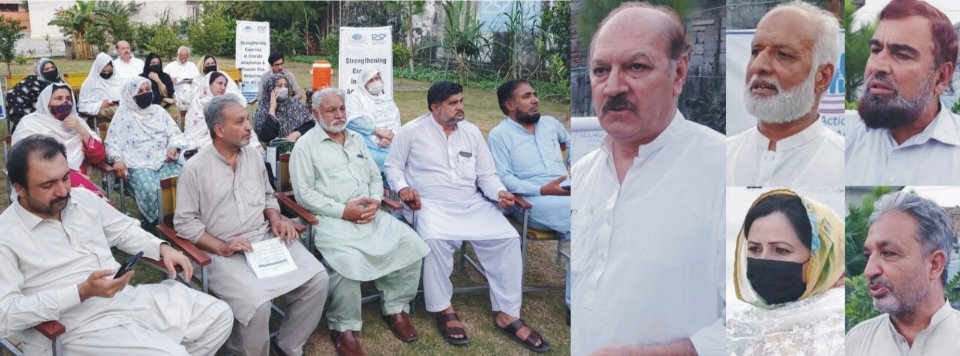
Yet the picture is not entirely bleak. Emerging forms of civic activism, grassroots organizing, and advocacy by civil society groups suggest that residents are not simply passive observers. Local initiatives, community mobilization, and public campaigns indicate potential for more inclusive urban development. Residents of informal settlements and other marginalized areas are beginning to challenge the structures that limit them, advocating for recognition, services, and fair treatment. In this sense, Islamabad is not just a site of structural inequality but also a space where collective action could reshape urban life.For Pakistan, Islamabad offers a critical case study. The city illustrates how urban planning, bureaucracy, and economic power intersect to shape the daily lives of millions. Its challenges — from informal settlements to transport inequities — are not unique, but they highlight broader trends across South Asia: rapid urban growth, unequal resource distribution, and bureaucratic rigidity. At the same time, the city demonstrates the ongoing relevance of classical sociological theories. Marx and Weber, writing over a century ago, provide valuable frameworks for understanding contemporary urban realities, showing that cities are never just physical spaces but complex social systems influenced by power, wealth, and governance.Looking ahead, the city’s future will depend on how policymakers, planners, and citizens navigate these tensions. Can Islamabad move beyond its image as a planned, orderly showcase to become a genuinely inclusive capital? Will bureaucracy evolve to respond more flexibly to residents’ needs, or will rigid rules continue to exclude significant portions of the population? And how will economic inequality shape the lived experience of urban life in the years to come?Islamabad may appear pristine from the highway, with its wide avenues, green belts, and government offices. But the reality on the ground tells a different story — one of uneven development, structural barriers, and social hierarchies.
Understanding the city through the lenses of Marx and Weber reveals both the depth of these challenges and the potential pathways for change. In doing so, it reminds us that urban development is not only about infrastructure or aesthetics; it is about people, equity, and the rules and systems that govern their lives.In the end, Islamabad’s story is emblematic of a broader urban challenge in Pakistan: building cities that are not only functional but also fair, inclusive, and responsive to the people who inhabit them. How the capital navigates this delicate balance will serve as a measure not just of urban planning, but of social justice in the heart of the country.