
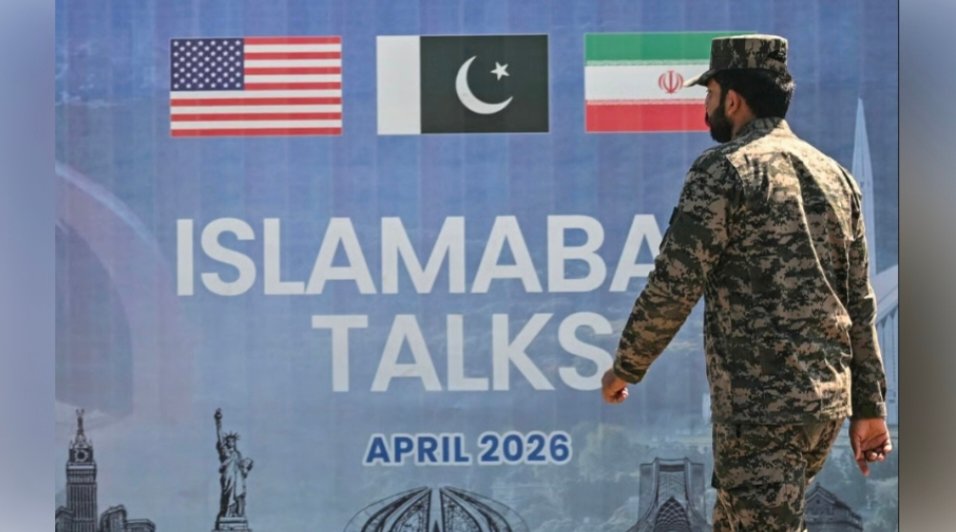
Reports in the United States media have suggested that a second round of negotiations between the US and Iran is expected to take place in Islamabad on Wednesday, though uncertainty persists amid conflicting signals from Tehran.According to the reports, US Vice President J. D. Vance is likely to arrive in Pakistan, while an Iranian delegation is also expected in the federal capital for the anticipated talks.
Meanwhile, US President Donald Trump has reiterated his administration’s firm stance, stating that the blockade of the Strait of Hormuz would remain in place until a deal is reached. He emphasised that Washington would not succumb to pressure and that any agreement would be finalised only on favourable terms.In remarks shared on social media, Trump said a prospective deal with Iran would surpass the agreement reached during the tenure of former president Barack Obama, describing it as a framework that would ensure global peace, security, and stability. He reiterated that Iran must not be allowed to acquire nuclear weapons, while suggesting that prudent leadership could steer the country towards prosperity.
The US president also criticised previous policies under Joe Biden, warning that failure to secure an agreement could heighten the risk of conflict. He maintained that his administration would not rush into what he termed a “bad deal”.The White House echoed this position, stating that any agreement under Trump’s leadership would safeguard peace and security not only in Israel and the Middle East but also in Europe and the United States.However, Iran has expressed reservations regarding the proposed talks.
Foreign Ministry spokesperson Esmail Baghaei said Tehran does not trust Washington and currently has no plans to participate in a second round of negotiations. He added that the Iranian delegation would not travel to Pakistan, despite acknowledging Islamabad’s constructive role in promoting peaceSeparately, Deputy Prime Minister and Foreign Minister Ishaq Dar held a telephone conversation with his Iranian counterpart Abbas Araghchi, with both sides agreeing to intensify diplomatic efforts to maintain regional stability.
According to Iran’s Foreign Ministry, Araghchi underscored that provocative actions and repeated ceasefire violations remain significant obstacles to sustained diplomacy. He also pointed to threats against Iranian commercial vessels and what he described as contradictory and hostile statements as key challenges to the continuation of the diplomatic process.