
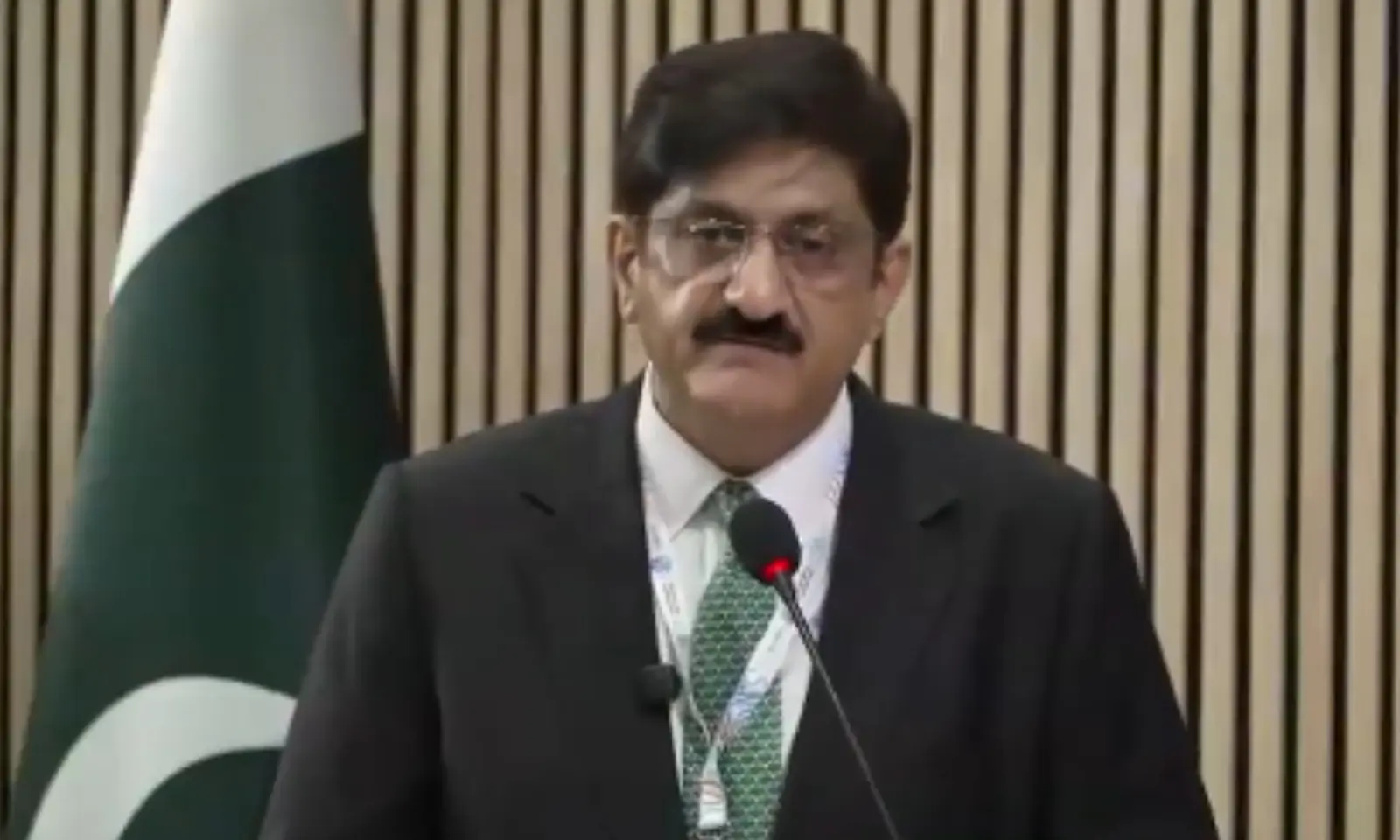
Delivering the keynote address during a session titled ‘Sindh’s Climate Action: Combating Climate Change’ at the Pakistan Pavilion, he said that in the wake of the devastating 2022 floods, his province had set a target of constructing 2.1 million climate-resilient houses for flood-affected families, making it the world’s largest post-disaster housing reconstruction initiative.
The provincial government had adopted a strategy of rebuilding stronger and safer communities rather than merely repairing damaged infrastructure, CM Murad said, adding that one million houses had been completed within three and a half years, while another 700,000 were at different stages of construction.
More than 42,000 community committees had been established, and over 1.7 million bank accounts had been opened for beneficiaries. Financial assistance was transferred directly to families, enabling them to construct their own houses, he said. He also highlighted that women had been given a central role in the rehabilitation process, through property ownership and financial empowerment.
CM Murad sets out post-flood recovery on homes, barrages, embankments and mangroves; says vulnerable communities must not face climate crisis alone
Regarding flood protection and infrastructure rehabilitation, CM Murad said Sindh had reconstructed 205km of protective embankments, restored 157,000 hectares of agricultural land and strengthened the Manchar Lake protection system, increasing its floodwater discharge capacity to 83,500 cusecs.
All 44 gates of Sukkur Barrage had been replaced, while reconstruction of 54 out of 65 gates at Guddu Barrage had been completed, he noted, adding that Sindh aimed to complete the barrage rehabilitation and modernisation programme by next year.
Simultaneously, the government is rebuilding 5,811 flood-affected schools, rehabilitating 141 roads covering 825 kilometres across 19 districts and restoring more than 1,000 damaged health facilities, with particular attention to maternal and child healthcare, he said.
Highlighting nature-based climate solutions, the chief minister said Sindh had restored mangrove forests over 126,000 hectares in the Indus Delta.
Under the Delta Blue Carbon initiative, an estimated 142 million tonnes of carbon dioxide emissions were expected to be absorbed or reduced, while 5.6 million tonnes of carbon credits had been verified.