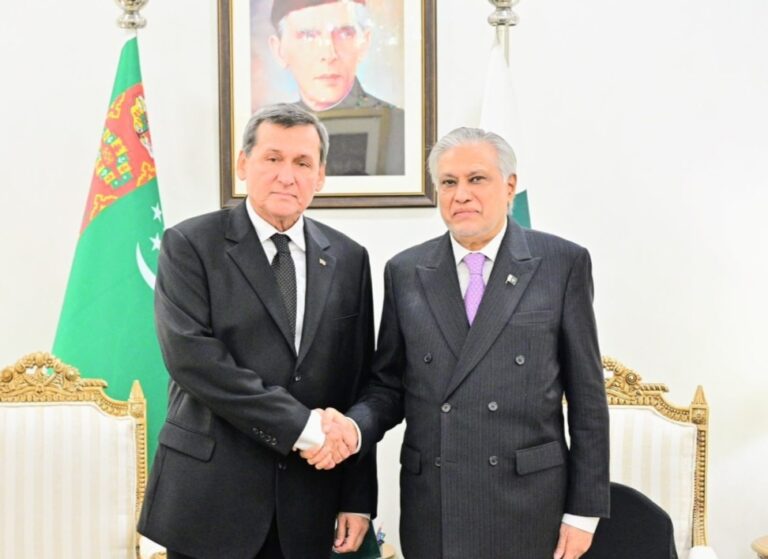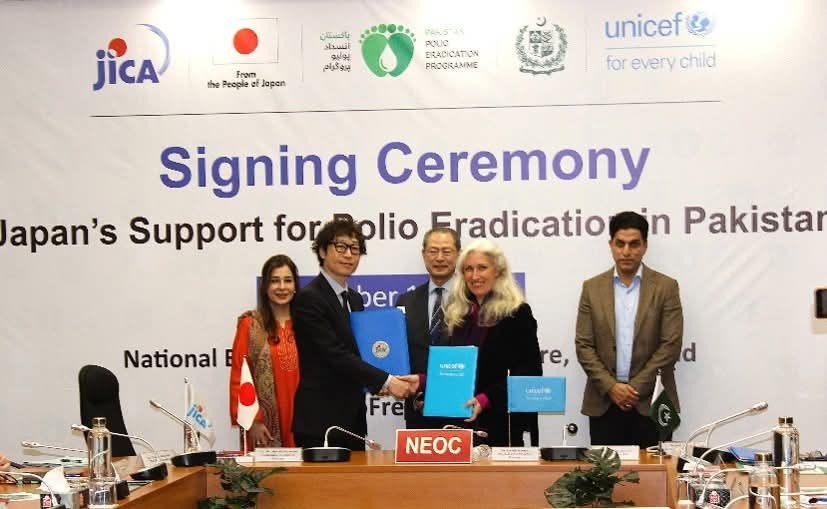

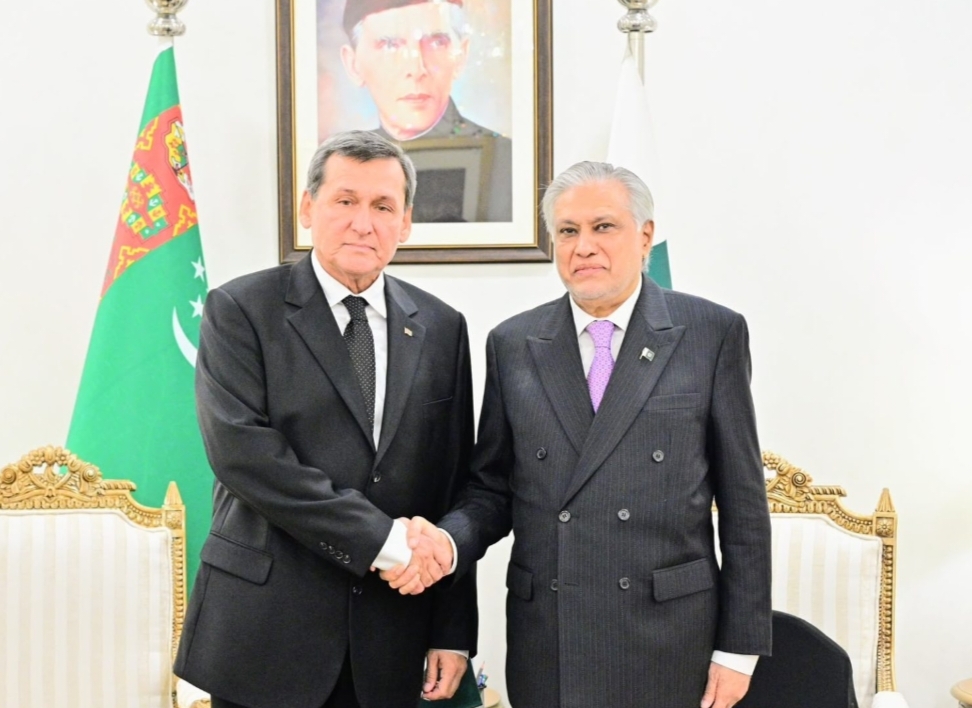
ISLAMABAD, Nov 17: Pakistan and Turkmenistan have agreed to strengthen bilateral cooperation in trade, energy, investment and regional connectivity, signing three key agreements aimed at expanding their strategic and economic partnership.The agreements were signed during the sixth session of the Pakistan-Turkmenistan Joint Intergovernmental Commission, co-chaired by Deputy Prime Minister and Foreign Minister Senator Mohammad Ishaq Dar and Turkmenistan’s Deputy Chairman of the Cabinet of Ministers and Foreign Minister Rashid Meredov.Addressing a joint press stakeout, Ishaq Dar said the discussions were held in a cordial and constructive atmosphere, reflecting the longstanding friendship, mutual trust and goodwill between the two countries.The two sides signed the protocol of the sixth session of the Joint Intergovernmental Commission, a Programme of Cooperation between the foreign ministries for 2026-2030, and a Memorandum of Understanding on tourism cooperation.
Dar said the participation of Turkmenistan’s Ministers of Energy and Trade and Economic Relations highlighted the importance both countries attached to expanding cooperation in trade and energy.He said both countries discussed strengthening bilateral trade, attracting investment and improving regional connectivity, including the development of a bilateral transit trade framework and commercially viable transport routes.Pakistan also expressed its readiness to facilitate the transportation of Turkmenistan’s cargo through its seaports, particularly Karachi and Gwadar, while encouraging stronger business-to-business engagement and cooperation between chambers of commerce.On energy cooperation, Dar highlighted discussions on the Turkmenistan-Afghanistan-Pakistan-India (TAPI) gas pipeline project, stressing the importance of continued coordination on its technical and commercial aspects.The proposed Turkmenistan-Afghanistan-Pakistan electricity transmission project and its associated fibre-optic communications link were also discussed, with both sides agreeing on the need for further assessment of their feasibility.The talks also covered potential cooperation in agriculture, industry, tourism, culture, higher education, information technology, healthcare and financial services.Dar emphasized the importance of regular engagement between relevant ministries, institutions and business communities to ensure effective implementation of the decisions reached during the commission meeting.The two foreign ministers also exchanged views on regional and international developments, including Palestine, Jammu and Kashmir, Afghanistan and regional tensions involving the United States and Iran.Dar reiterated Pakistan’s support for the Palestinian people’s legitimate rights, calling for uninterrupted humanitarian assistance to Gaza and a just and lasting settlement in line with relevant United Nations resolutions.He also reaffirmed Pakistan’s position on Jammu and Kashmir, emphasizing a peaceful resolution in accordance with UN Security Council resolutions.On Afghanistan, he stressed that Afghan territory must not be used for activities against any country, particularly Pakistan.Referring to the Indus Waters Treaty, Dar reaffirmed Pakistan’s commitment to the agreement and termed India’s unilateral decision to hold it in abeyance a violation of international law, highlighting its potential consequences for Pakistan’s water, food and energy security.For his part, Rashid Meredov described the commission meeting as constructive and business-oriented, saying both countries had reviewed progress on existing agreements and explored practical measures to strengthen bilateral cooperation.He said the two sides had agreed to convene a meeting of the TAPI Steering Committee and hold the second session of the Joint Working Group on Oil and Gas at the earliest.
Discussions on transport cooperation included strengthening links between Turkmenistan’s Turkmenbashi seaport and Gwadar, developing a transport and transit hub in Serhetabat, and exploring railway connectivity through Afghanistan.Meredov also highlighted plans to increase bilateral trade, establish trade houses, support small and medium-sized enterprises and improve the legal and contractual framework for economic cooperation.He termed the signed protocol a practical roadmap for government institutions and business communities, stressing that timely implementation, clear responsibilities and regular monitoring would be essential for achieving the agreed objectives.Concluding the engagement, Ishaq Dar invited his Turkmen counterpart to visit Pakistan in 2027, when the country is scheduled to host the Shanghai Cooperation Organisation (SCO) Heads of State Summit and the Economic Cooperation Organization (ECO) Summit.