
Kazakhstan has entered a pivotal stage in its political transformation following a recent constitutional referendum that officials describe as a landmark moment in the country’s post-independence history.The nationwide vote, the third of its kind in recent years, recorded a turnout of 73.12 percent, with 87.15 percent of voters supporting the proposed constitutional changes—figures that underscore strong public backing for institutional reform.
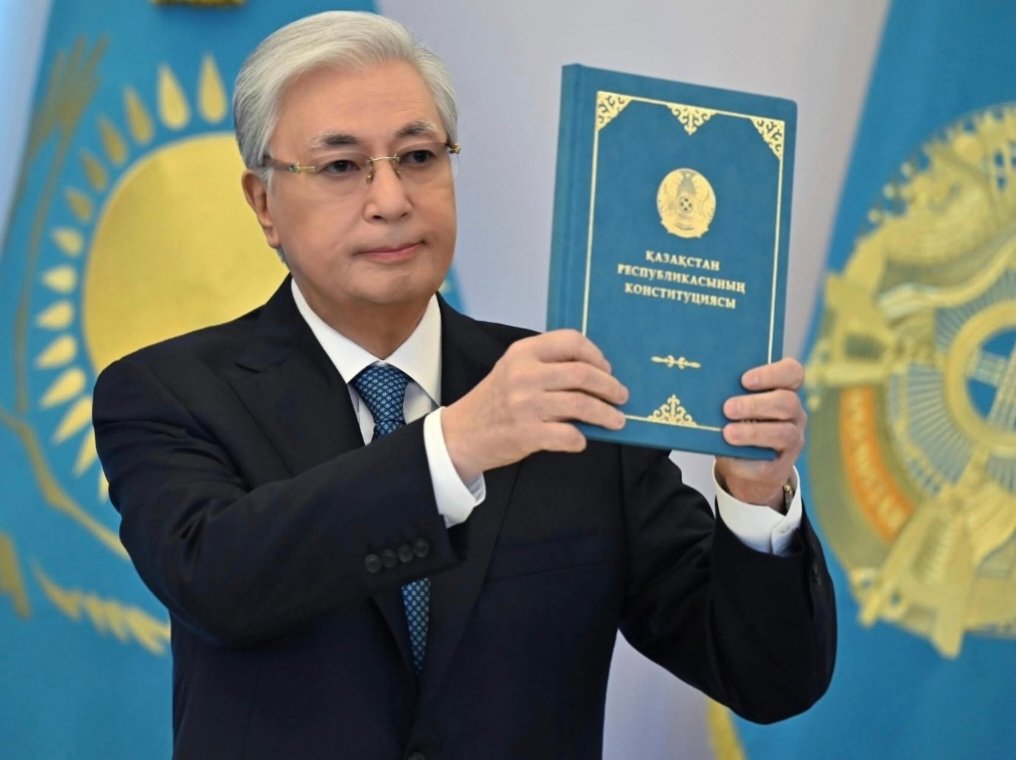
The newly approved constitution outlines Kazakhstan’s vision of a modern, just, and law-based state, emphasizing the protection of human rights, freedoms, and the principles of a secular system. It also prioritizes development in education, science, technology, culture, and environmental sustainability, reflecting the aspirations of a younger and increasingly engaged population.Drafted through an extensive process, the constitution involved a 129-member Constitutional Commission, which reviewed approximately 12,000 proposals from experts and civil society over six months of public consultations.
The reforms aim to strengthen governance under a revised framework described as “Strong President, Influential Parliament, and Accountable Government.” Key institutional changes include the abolition of the presidential quota in parliament, plans for a streamlined legislative system, and the establishment of a consultative People’s Council to enhance public participation.Additional measures include the introduction of a vice president position and term limits for senior officials, aimed at ensuring leadership renewal and improved accountability.A significant portion of the new constitution is dedicated to safeguarding human rights, including guarantees for privacy, personal data protection, and the inviolability of housing. It also reinforces judicial independence to ensure fair legal representation for all citizens. Future constitutional amendments will require approval through a national referendum, placing major decisions directly in the hands of the public.
Economically, the constitution seeks to boost investor confidence by strengthening property and intellectual property rights and introducing legal frameworks to support innovation and industrial growth. Kazakhstan already accounts for nearly 70 percent of foreign direct investment in Central Asia and aims to further expand its role as a regional economic hub.Officials say the reforms will accelerate the country’s transition toward a digital economy while enhancing global competitiveness. Kazakhstan continues to develop new trade routes, deepen regional cooperation, and invest in emerging technologies, including advanced computing and artificial intelligence.
More than three decades after independence, Kazakhstan positions the 2026 constitution as a shift from survival to long-term development and modernization. March 15, the date of the referendum, is set to be observed annually as Constitution Day, marking what leaders describe as a historic step toward a more inclusive and forward-looking state.