
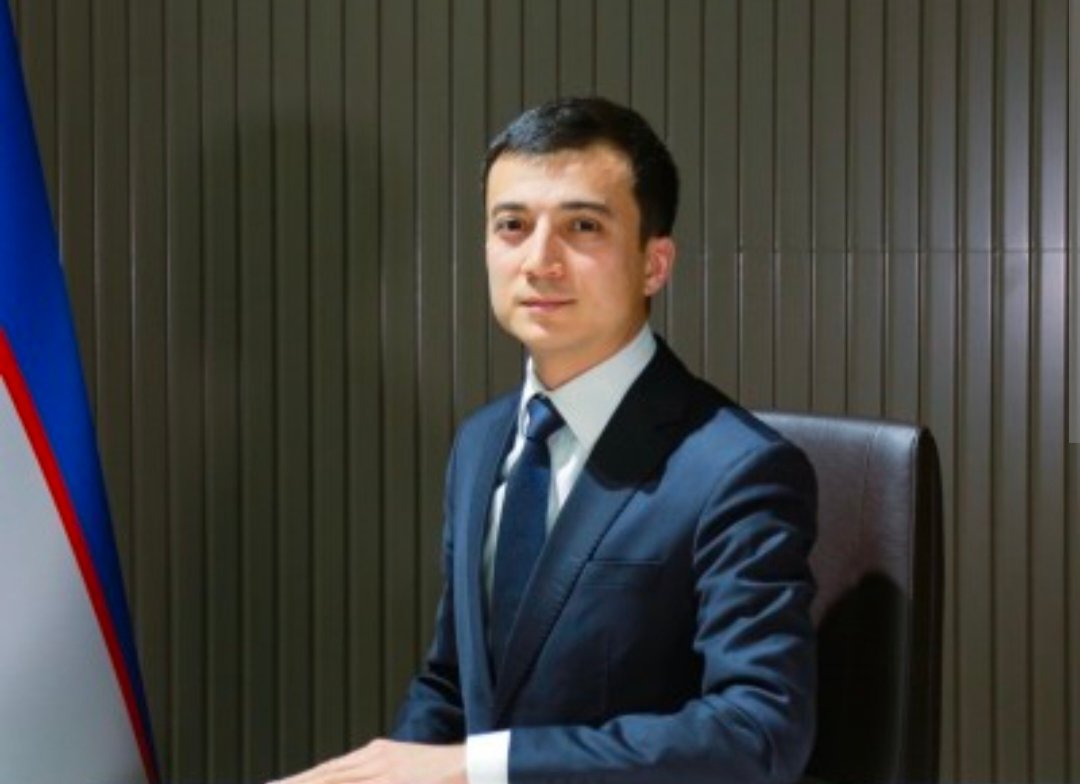
Fazliddin Muminov,
Owing to its geographical location, Central Asia has long served as a global crossroads where different civilisations, cultures, scientific schools and centres of learning converged. Today, the integration of education and science, academic mobility and joint research pursued within the Shanghai Cooperation Organisation are not merely a modern necessity; they are a natural and consistent process rooted in the region’s millennia-old historical and cultural heritage and rich scholarly traditions.Certainly, the integration of knowledge and learning in Central Asia has never been constrained by borders or national and ethnic divisions.
Along the Great Silk Road, not only a wide variety of goods but also progressive ideas, scientific discoveries and teaching methods were exchanged intensively. Clear evidence of this can be seen in the teachings of the Avesta — “good thoughts, good words, good deeds” — and in the Sogdian and Bactrian cultures, which embodied the earliest foundations of educational and intellectual integration in this land. The historical reality that unfolded in the region — the Eastern Renaissance — turned Central Asia, on the basis of linguistic, spiritual and political commonality, into a centre of global science and education. In particular, during the period of Tsarist conquest and the complex geopolitical circumstances that followed, Central Asia’s enlightened reformers — the Jadids — called for the modernisation of education and the restoration of regional unity. Their enduring legacy and ideas still live in the hearts of the region’s peoples.These vivid and enduring memories demonstrate that educational integration in Central Asia has deep genetic and cultural roots. It should be noted that the processes now taking place within the SCO and reflected in the higher education system are a logical and modern continuation of these historical traditions.As the Head of our State noted at the meeting of the leaders of the Central Asian states and Azerbaijan, Central Asia, once fragmented, is now uniting around shared development goals. Today’s complex and unpredictable international environment calls for renewed determination, strong political will and even closer coordination.
Against this backdrop, Azerbaijan’s accession to the format of Consultative Meetings is elevating our cooperation to a qualitatively new, macro-regional level and creating a historic opportunity to form a single space of development and prosperity linking Central Asia, the South Caucasus and Afghanistan.Modern academic openness and educational reforms in the region are once again helping Central Asia emerge as one of the world’s centres of science and intellectual development. Rapid shifts in geopolitical and socio-economic processes are fundamentally reshaping the role of science, education and intellectual resources on the global stage. Today, as an important platform for political and economic dialogue, the SCO has become a central arena for scientific and technological cooperation capable of ensuring the sustainable development, technological independence and innovation-led growth of our countries.
From this perspective, education and innovation within the SCO are emerging as major driving forces for human capital development and the promotion of peace and stability. Multilateral cooperation in higher education and science is increasingly recognised as a new stage in strengthening interregional ties.“Our collective strength lies in unity, mutual trust and our unwavering commitment to building together.” Guided by this regional principle, the following strategic objectives need to be pursued:- transform Central Asia into a globally competitive hub for innovation in education, science, digital technologies, and big data;- create an environment of sustainable development, strong interconnectedness and good-neighbourliness at the heart of Eurasia;- strengthen the region’s standing as an international actor and deepen practical cooperation within intergovernmental organisations and “Central Asia Plus” formats. In particular, creating a shared scientific and educational space within the SCO is opening unprecedented opportunities for the region’s young people. Greater academic mobility, mutual recognition of qualifications and academic credentials, and expanded joint research projects are key pillars for strengthening the overall stability and intellectual capacity of SCO Member states.It must be acknowledged that cooperation in education and science forms a solid foundation for humanitarian cooperation.
A qualitative transformation of work in the humanitarian sphere will further strengthen unity, solidarity and mutual understanding among our peoples and serve as a reliable bridge for passing the noblest values of the “Shanghai Spirit” on to future generations in their fullest form.The expansion of the SCO University network plays an important role in introducing international standards across the region’s higher education system. This process promotes not only student exchanges but also the formation of a new generation of scholars and professionals capable of jointly addressing complex challenges at the regional level.Indeed, educational integration fully aligns with the shared long-term interests of the peoples of Central Asia. Through the SCO platform, higher education institutions can jointly harness digital learning and artificial intelligence and exchange expertise and resources in science and technology — an essential condition for economic growth.Support for educational initiatives in the region is one of the most effective ways to strengthen geopolitical stability and cultural dialogue. Moreover, environmental protection, the introduction of green technologies and environmental security have always been, and will remain, priorities on the regional agenda. Knowledge exchange among young people and researchers will advance science and elevate the longstanding bonds of friendship and mutual trust among our peoples to a new level.
Encouragingly, new educational initiatives within the SCO are helping Central Asian universities secure a worthy place in the global academic community. Joint programmes and grants being developed provide talented young people in the region with opportunities to receive high-quality education both at home and in partner countries.In recent years, at the initiative of the Head of our State, the development of science, technology and innovation has been designated one of the highest priorities of state policy. Systemic reforms are being consistently implemented to build a modern innovation-driven economy based on knowledge, scientific research and technological entrepreneurship. The practical results of these reforms and the major milestones achieved are reflected in substantial figures and concrete indicators.In 2025 alone, Uzbekistan carried out extensive work to develop human capital and broadly engage young people in science. More than 250 young scientists completed internships and practical training at leading research centres abroad, while 5,250 PhD and DSc admission quotas were allocated for postgraduate education.At the same time, more than 50,000 young innovators participated in youth technopark programmes.As a mark of international recognition of these systemic reforms, Uzbekistan strengthened its position in the Global Innovation Index, ranking 79th among 139 countries.Importantly, the era of declarative statements in education and science is over; today, the SCO is becoming a platform for concrete projects and strategic initiatives.
In particular, at the 10th Meeting of the Ministers of Education of the SCO Member States, held in Belarus on 16 June 2026, the idea of strengthening mutual trust through education and expanding the space for cooperation and knowledge became the central theme. The initiatives put forward at the forum by K. Sharipov, Minister of Higher Education, Science and Innovation of the Republic of Uzbekistan, as well as Uzbekistan’s experience in expanding access to education, attracted the close attention of the Member States.
At the same time, the expansion of innovation cooperation was discussed in detail at the 10th Meeting of the Heads of Ministries of Science and Technology of the SCO Member States, held in Bishkek on 22 May 2026.In 2025, the Ministry of Higher Education, Science and Innovation of the Republic of Uzbekistan and the relevant institutions of SCO Member States announced an international call for joint scientific projects. The call, which envisaged applied and innovation-oriented research with partners from Russia, Belarus, Kazakhstan, China and Pakistan, attracted strong interest from the scientific community and received numerous applications.Another important instrument for strengthening human capital across the SCO is academic mobility.In recent years alone, the Agency for Innovative Development has organized research internships for more than 140 young researchers and specialists at leading scientific and educational centres in China, Russia, Kazakhstan and India.This is becoming a robust mechanism for long-term cooperation and the training of a new generation of scientists.Ahead of the 25th anniversary of the Shanghai Cooperation Organisation and the Bishkek Summit, the expert community, while reviewing the Organisation’s achievements, recognises humanitarian and educational cooperation as one of the most vital areas of its work.
As noted, the SCO’s greatest achievement over the past quarter-century is that it has sustained dialogue among states with different political and cultural perspectives.Today, the concept of security is no longer limited to military or border-related factors; it also encompasses digital development, artificial intelligence, the environment and human capital development. For an organization that brings together nearly 40 percent of the world’s population and vast intellectual resources, educational integration is the only sound path to maintaining stability amid geopolitical competition.In this context, special mention should be made of the international competition “100 Future Innovators of the SCO,” held among young people from SCO Member States as part of the successfully organised “Engineers of the Future” International Festival in Tashkent.Such events bring together students, young scientists, engineering teams and technology teams, thereby strengthening youth diplomacy and technological leadership across the SCO.
In accordance with the final documents and declarations of the SCO Council of Heads of State and meetings of sectoral ministers, the integration of education and science in Central Asia and the broader SCO region is recognised not as routine inter-institutional cooperation but as the most prudent strategic investment in the region’s sustainable development, peace, good-neighbourliness and competitiveness.In conclusion, the digital ecosystems being built together, green science initiatives and sincere academic dialogue among young people will play a decisive role in turning the SCO region into a powerful engine of global development and innovation.