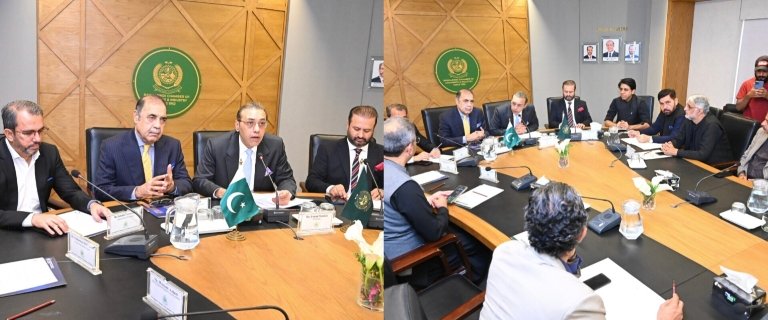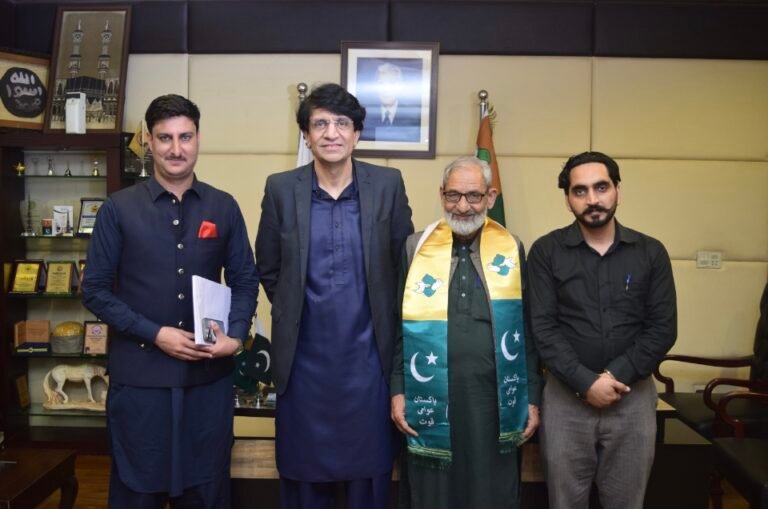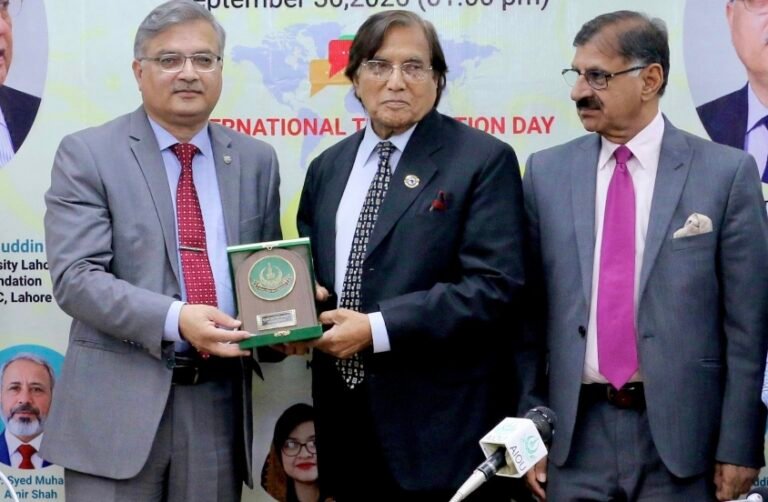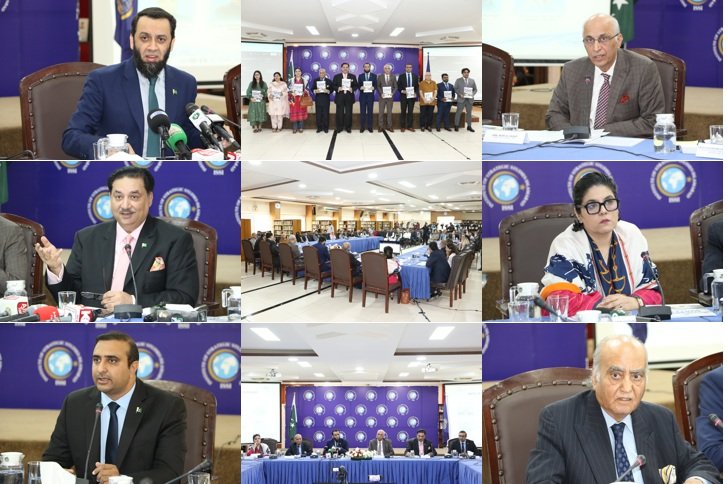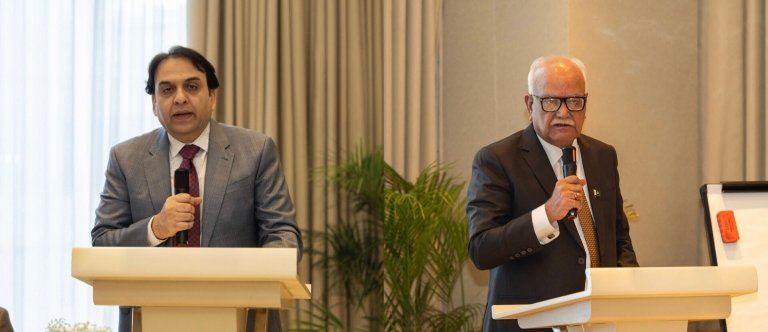

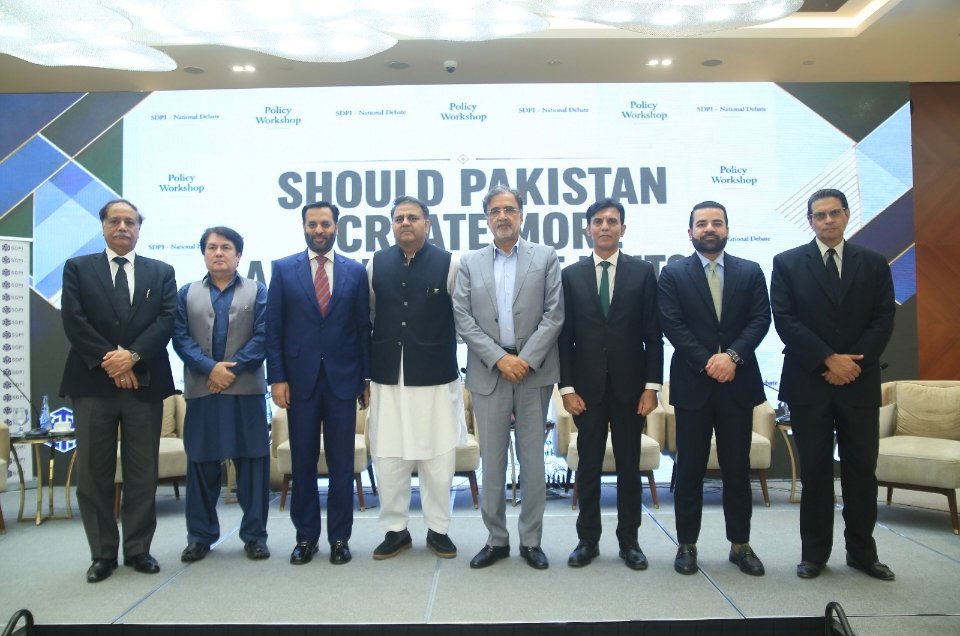
ISLAMABAD (13 August 2026): A high-level national debate convened by the Sustainable Development Policy Institute (SDPI) brought together political leaders, policymakers, technocrats and civil society representatives for a wide-ranging discussion on how Pakistan can improve governance and service delivery. The debate examined multiple reform options, including the creation of new provinces and administrative units, stronger and more empowered local governments, fiscal devolution, institutional reform and better alignment of government structures with citizens’ needs.The debate, titled “Should Pakistan create more administrative units?”, was attended by senior representatives of PML(N), PPP, MQM, PTI, JI and JUI(F), federal ministers, technocrats and civil society representatives. Participants offered different perspectives on the appropriate structure and scale of governance, with some supporting the creation of new provinces or smaller administrative units, others stressing empowerment of existing tiers, and many arguing that these options should be assessed together rather than treated as mutually exclusive.A recurring theme was that any governance restructuring should be informed by constitutional requirements, public demand, fiscal sustainability, administrative capacity and its likely impact on service delivery. Participants also highlighted the need for stronger devolution of political, administrative and financial authority so that governance structures, whether existing or newly created, can respond more effectively to citizens.Syed Mustafa Kamal, Federal Minister for National Health Services, Regulations and Coordination, said administrative restructuring should ultimately be judged by whether it reduces citizens’ sense of exclusion and improves service delivery.
He argued that smaller administrative units could bring government closer to citizens and stressed that local governments would remain an essential part of the governance architecture regardless of the number of provinces. He also said proposals for new provinces should be backed by public support.Barrister Aqeel Malik, Minister of State for Law and Justice, said citizens most frequently approach elected representatives over local service delivery issues such as roads, streets and sewerage, underscoring the need for effective local governments. He also highlighted the financial constraints affecting meaningful devolution and proposed simultaneous national, provincial and local government elections for uniform terms, with local bodies receiving constitutional protection against premature dissolution.Barrister Danyal Chaudhry, Parliamentary Secretary for Information and Broadcasting, said the question of new provinces should be approached constitutionally and through evidence. He called for detailed assessment of the revenue base, expenditure requirements and long-term fiscal impact of any proposed province, including at least a decade-long view of financial sustainability. He also stressed the need for political, administrative and financial devolution to the grassroots.Qamar Zaman Kaira, PPP leader and former information minister, noted that the debate over administrative restructuring is not new and cautioned that any reform process should be managed carefully so that it does not deepen inter-provincial or inter-regional sensitivities over resource distribution. He said the 18th Constitutional Amendment increased the provincial share of the divisible pool from 46 to 57 per cent, but argued that much of the power and resources devolved to provinces had not subsequently moved down to local governments.
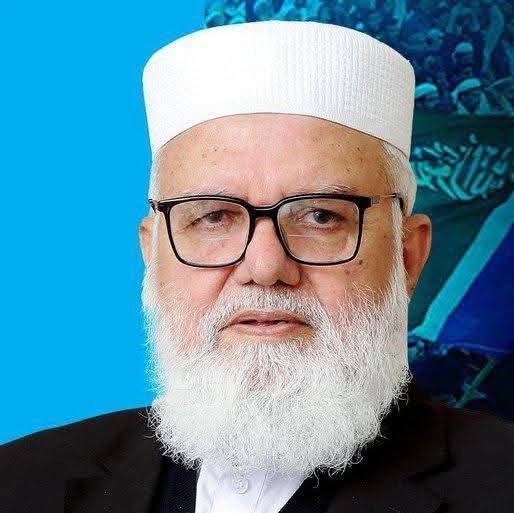
Nadeem Afzal Chan, PPP leader and former Member of National Assembly, called for political and state stakeholders to develop a consensus-based reform agenda. He identified judicial and electoral reform, intra-party democracy and rule of law as related governance priorities, and said any discussion on administrative restructuring should remain anchored in the constitutional framework.Liaqat Baloch, Naib Ameer of Jamaat-i-Islami, said the creation of new provinces and the strengthening of local governments should be considered alongside broader fiscal and constitutional reforms. He called for more effective use of the Council of Common Interests to address disputes between the federation and provinces, particularly over resources, water and other constitutional matters.Asad Umar, former federal minister, described declining public trust in state institutions and excessive centralization as major governance challenges. He proposed a three-tier NFC arrangement through which resources would be distributed among the federal, provincial and local governments according to a defined formula. He said new provinces should be considered where there is strong public demand and argued that the economic case for larger or smaller provinces should be assessed through evidence rather than assumptions.Mian Amer Mahmood, former Mayor of Lahore, supported evidence-based consideration of new provinces, arguing that the objective should be citizens’ welfare and easier access to public services rather than territorial division for its own sake. He called for greater accountability of elected representatives, stronger political parties and further devolution from provinces to lower tiers of government.Rana Ihsan Afzal, Coordinator to the Prime Minister on Commerce, said the discussion should extend beyond the number of provinces to the wider question of vertical devolution and the creation of financially autonomous, continuous and empowered local governments. Drawing comparisons with China, he said local governments should be linked more closely to economic performance, investment, exports and local development, while federal and provincial development spending should be better coordinated around national economic priorities.Salman Akram Raja, PTI Secretary-General, argued that Pakistan already has divisions, districts and Tehsils that require greater empowerment. He said even splitting Punjab into three provinces would leave each unit larger in population than most European countries. He called for clearly enumerated constitutional, administrative, political and financial powers for local governments, including stronger constitutional protection for Provincial Finance Commission arrangements.
He further said any restructuring of provincial boundaries must follow the process prescribed under Article 239 and could not be substituted by a referendum.Aasia Ishaque, MNA and MQM-P leader, advocated the creation of smaller provinces for effective administration but strongly opposed dividing provinces on linguistic or ethnic lines. She called for a combination of smaller administrative units and a robust local government system with clearly defined powers under Article 140-A of the Constitution.Noor Alam Khan, MNA former chairman PAC called for comprehensive governance reforms before and alongside the creation of new provinces. He said Article 239 and the constitutional requirement of a two-thirds parliamentary majority must be respected in any attempt to create new provinces.Dr Farrukh Saleem, economist and political analyst, opposed creating a large number of additional provinces without first addressing institutional weaknesses. He argued that Pakistan’s central problem was expenditure and governance rather than tax collection.Muhammad Mallick, senior journalist and analyst, said structural changes would remain ineffective without changing institutional behaviour and political culture. He identified Pakistan’s major challenge as a crisis of institutional capacity, arguing that administrative restructuring alone could not solve governance failures.Former federal minister Fawad Hussain Chaudhry said any restructuring should proceed through political consensus rather than unilateral decisions. He proposed that province names should be retained even if provinces are subdivided, to preserve identity while allowing administrative devolution; and normalisation of Pakistan’s political environment, including dialogue between political forces, should precede structural reform.Zahoor Dhareeja, a prominent advocate of a separate Seraiki province, argued that the creation of a new province was essential to address the region’s governance, representation, employment and identity-related challenges. He said a separate province would provide greater opportunities through dedicated quotas in the civil services and educational institutions and help address the region’s longstanding development deficit.
Barrister Muhammad Ali Saif, former federal minister and advisor to chief minister KPK, said any move toward new provinces must be preceded by broad political consensus, without which their legitimacy would be undermined. A national commission should be constituted, with parliamentary and political-party representation, and mandated to deliberate the issue with all stakeholders, he said.In his concluding remarks, Dr Abid Qaiyum Suleri, SDPI Executive Director, said the debate demonstrated the value of bringing different governance options into a common policy discussion. He noted that participants presented varied views on new administrative units and provinces, while also identifying strong local governments, effective fiscal devolution and improved service delivery as important elements of any future governance framework. He said the discussion had helped identify areas for further deliberation and evidence-based policy work rather than reducing the issue to a single structural choice.Others who spoke included Dr Khaqan Hassan Najeeb, former Adviser at the Ministry of Finance; Muhammad Ali Durrani, former federal minister; and Haroun ur Rashid, President of the Supreme Court Bar Association.