
Huawei Chief Tech Officer Briefs Management on Historic Education Reset in China
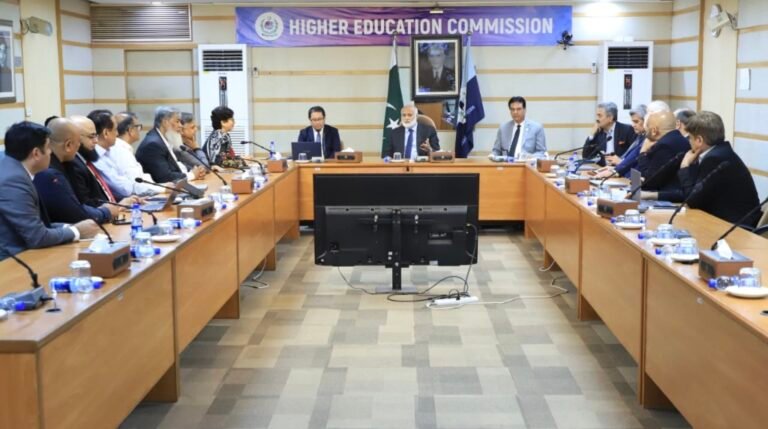
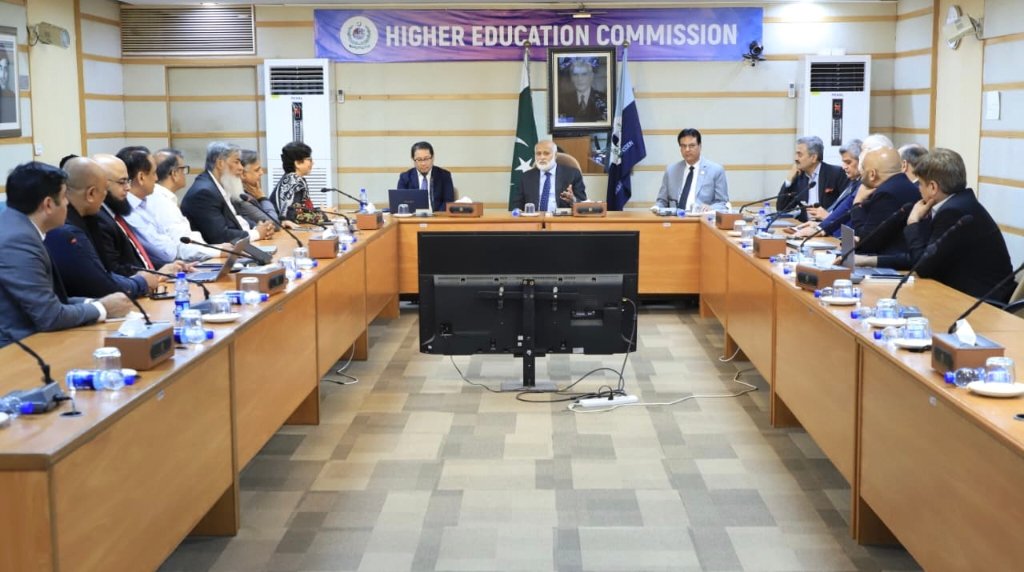
Islamabad, September 10, 2026: The top leadership of the Higher Education Commission (HEC) Pakistan held a detailed deliberative session on how to turn universities digitally ready and integrate Artificial Intelligence in the higher education so as to fully exploit the emerging technologies.
Cognisant of the way AI is reshaping the higher education landscape across the world, the senior management committee (SMC), led by Chairman HEC Dr. Niaz Ahmad Akhtar, deliberated on the measures necessary to adapt to the evolving necessities of higher education, campus life, and operational and infrastructure capabilities of institutions. The session was marked by a special presentation by Mr. Meng Gencang, Chief Technology Officer (CTO) and Vice President at Huawei Global Education Division. The HEC leaders discussed a strategic implementation roadmap to digital readiness of universities while keeping in view the strengths and gaps of the system and the local dynamics. They underlined the need for a phased development approach, focusing on building foundations and piloting, scaling up and integration, and systemisation and advancement. They identified the opportunities and challenges in the execution of digital integration strategies and also discussed embedding AI in the academic programmes through basic courses, Generative AI courses, Application Development Courses, and Certification Courses.
Dr. Niaz Ahmad Akhtar emphasised continuous efforts for digital upgradation in the higher education to keep abreast of the developments taking place in the sector globally. He termed digitalisation of infrastructure along with enhanced AI literacy as a need of the hour. He directed for productive engagements and sessions on reaching tangible outcomes for AI education and trainings, curricular interventions, and financial requirements. Mr. Meng Gencang shared a detailed account of how the digital advancements and AI are affecting the industries. He said AI is at the core production systems of most of the industries, including warehouses, governments, petrol kiosks, traffic systems, vehicles, logistics, design, manufacturing, energy, entertainment, airports, healthcare systems, maintenance, retail, and customer service, etc. Mr. Gencang affirmed that AI is casting a massive impact on talent which comes from higher education.
This is why integration of AI in the higher education is very critical, he emphasised. He shed light on the process adopted in China to progress in AI by setting priorities, pursuing objectives, and making adjustments wherever necessary. He highlighted that Huawei made heavy R&D investment to create more value for customers and society through innovation. He asserted that 2035 will witness ‘an intelligence world powered by AI’ as it promises better lives and society. He underscored how AI has revolutionised the education system, as the emerging technologies drive changes in production methods, leading to shifts in talent demand. Mentioning Pakistan’s National AI Policy, he said over 40 countries and regions are integrating AI to national general education systems. He also dilated on the major talent gaps – the gaps between education outcomes and societal needs — being created by the rapid AI development, employment crisis, and solutions to the challenges including generation of new productive workforce and integration of AI in physical systems.
The participants also brought under consideration the challenges of talent cultivation in the digital era, a systematic solution to curriculum and a unified AI literacy framework, AI capability building and strategic transformation, and leveraging existing HEC infrastructure for maximum impact. The forum also deliberated on utilising the CPEC Consortium of Universities to benefit from the expertise of Chinese universities in the domain of emerging technologies.