
Pakistan stands today at one of the most intricate and consequential junctures in its national journey. The traditional understanding of national security—once largely confined to troop deployments, frontier fortifications, and classical battlefield manoeuvres—has undergone a profound and irreversible transformation. Contemporary national security is now recognised as a comprehensive, multi-layered state endeavour. It embraces internal political and social stability, the pursuit of genuine economic self-sufficiency, deft diplomatic manoeuvring in an increasingly polarised world, robust defences against information and psychological warfare, advanced cybersecurity architecture, deliberate cultivation of societal harmony, and the careful construction of a unifying national narrative that resonates across all segments of society.The global geopolitical landscape is shifting with unprecedented speed. New power constellations are forming across South and Central Asia; hybrid warfare has become the preferred instrument of many state and non-state actors; terrorist organisations are reorganising, adapting, and regenerating; and cross-border sanctuaries continue to provide operational breathing space to hostile elements. These developments have collectively pushed Pakistan into a security environment that requires not incremental adjustments but a complete paradigm shift in strategic thought and institutional behaviour.
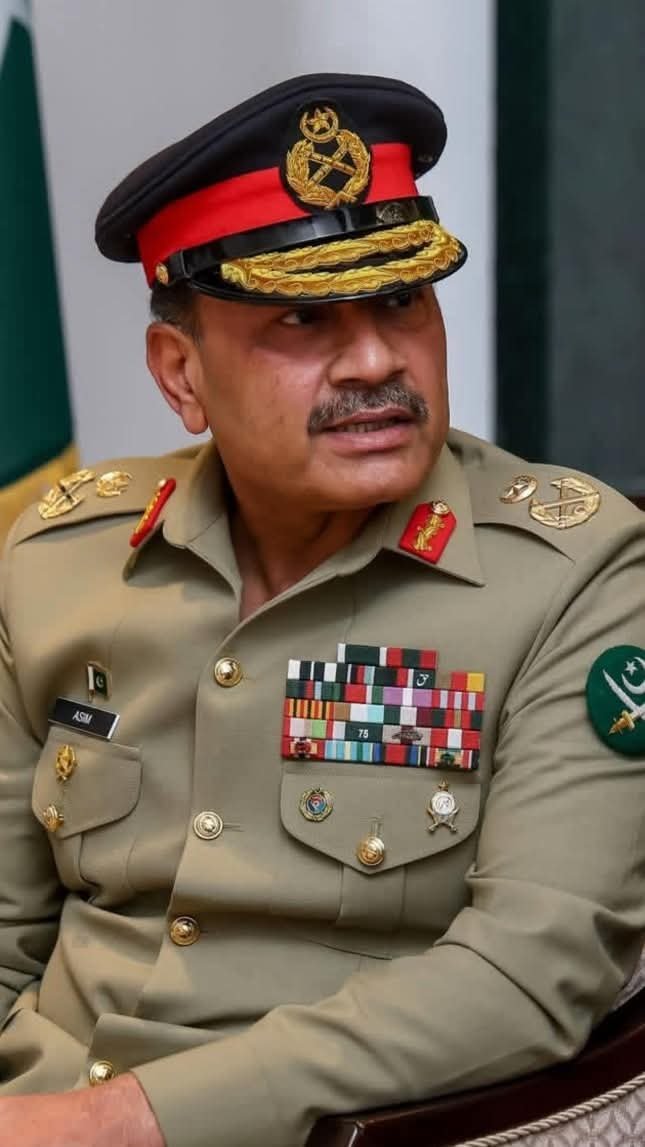
The opening months of 2025 and the first weeks of 2026 brought a stark escalation in threat intensity and diversity. Along the western border, militant violence surged dramatically, most notably in Khyber Pakhtunkhwa and Balochistan. The Tehrik-i-Taliban Pakistan (TTP) intensified attacks on security forces, civilian infrastructure, and public spaces, while the Balochistan Liberation Army (BLA) and associated outfits expanded their campaign of targeted assassinations, improvised explosive devices, and large-scale coordinated assaults. Urban centres across the country experienced renewed pressure: attempted strikes on sensitive installations, intensified suicide-bombing threats, and a flood of sophisticated propaganda disseminated through digital channels. These realities have made one fact abundantly clear: national security can no longer be treated as the exclusive preserve of the armed forces. It demands instead a fully synchronised national response involving military power, intelligence dominance, diplomatic leverage, economic fortitude, political consensus, and deep societal cohesion.In response, Pakistan authorised and executed a series of precise cross-border operations in 2025. The most significant of these occurred in October, when targeted airstrikes neutralised key TTP command-and-control nodes and training facilities located in Kabul, Khost, Jalalabad, and Paktika provinces of Afghanistan. These actions were taken only after exhaustive diplomatic efforts failed to persuade the de facto Afghan authorities to dismantle TTP infrastructure on their soil. In Balochistan the situation deteriorated further with the BLA’s so-called “Operation Herof 2.0”, launched in late January and continuing into early February 2026. Over those weeks, militants struck schools, district hospitals, commercial banks, bustling markets, police stations, Frontier Corps checkpoints, and civilian gatherings across several districts. The cumulative toll in lives and property was severe, and the psychological impact on local populations was profound. Such operations do far more than inflict tactical damage; they directly undermine investor confidence, slow progress on the China-Pakistan Economic Corridor (CPEC), and threaten the broader national development agenda.It is precisely within this demanding context that the leadership of Field Marshal Syed Asim Munir assumes historic importance. In December 2025, through the passage of the 27th Constitutional Amendment, he became the first officer in Pakistan’s history to hold the newly created office of Chief of Defence Forces (CDF) while simultaneously serving as Chief of Army Staff (COAS). This dual appointment is far more than an administrative arrangement. It institutionalises unified command and control over the Army, Navy, and Air Force; guarantees seamless continuity of strategic direction; and provides the structural framework necessary for the joint, theatre-level operations that modern multi-domain conflict demands.Field Marshal Munir has consistently articulated a forward-leaning vision on international stages. He has emphasised that the contemporary battlespace now extends decisively into the economic, informational, technological, and cognitive domains. Artificial intelligence, autonomous systems, cyber resilience, and the ability to shape narratives are no longer peripheral concerns—they are central pillars of national power. He has also reiterated Pakistan’s firm belief that lasting peace in the region is not merely desirable but essential to the country’s own security, and that Islamabad remains committed to genuine, broad-based international cooperation in the struggle against terrorism in all its forms.Institutional coherence has therefore been deliberately placed at the very heart of the current defence posture. The three services now engage in regular joint operational planning, accelerated technology absorption (including AI-driven decision support, unmanned aerial systems, and next-generation cyber-defence architectures), and near-real-time intelligence fusion. Campaign frameworks such as Operation Azm-e-Istehkam are explicitly designed with a dual horizon: decisive action against present threats combined with deliberate preparation for challenges that have not yet fully materialised.
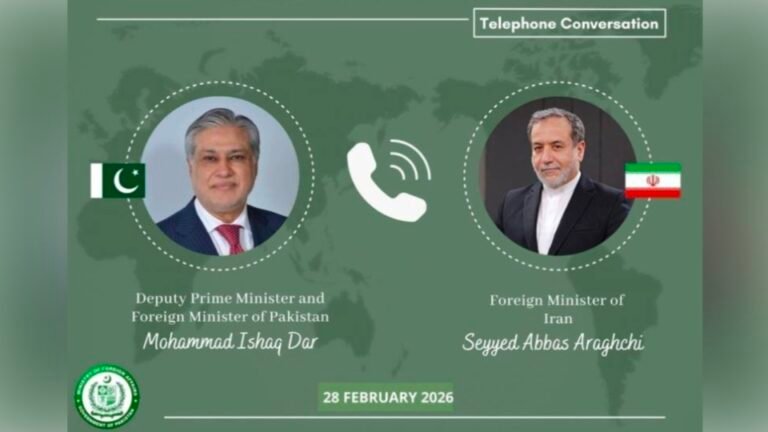
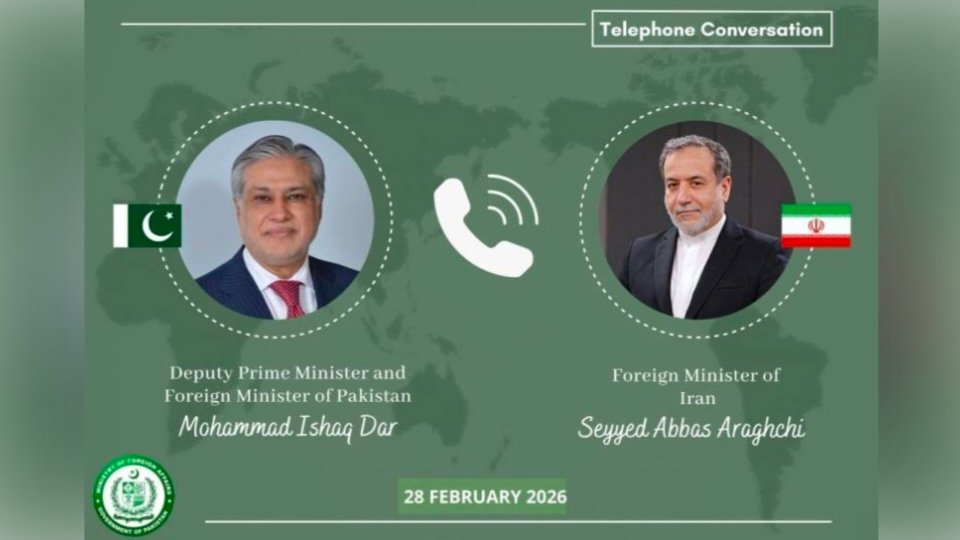
At the same time, military leadership attaches equal weight to the ideological and informational front. Extremist groups invest heavily in digital propaganda, exploit cross-border sanctuaries to maintain operational tempo, and leverage social-media platforms to radicalise vulnerable segments of youth. The response cannot be kinetic alone; it requires the parallel construction of a credible, inclusive, state-backed national narrative capable of mobilising society as a whole against the appeal of violence and division.The objective realities Pakistan confronts—persistent instability across the Durand Line, unresolved tensions in the east, economic coercion attempts by various actors, and the persistent shadow of hybrid threats—make it imperative that political, diplomatic, economic, and military policies move in lockstep. The encouraging reality is that senior state leadership has internalised this requirement with clarity and determination. The degree of policy alignment currently visible among Prime Minister Shehbaz Sharif, Deputy Prime Minister and Foreign Minister Mohammad Ishaq Dar, and the military high command is unprecedented in recent memory. This harmony is not cosmetic; it reflects a shared understanding that institutional silos serve no national purpose in an era of compound threats.Within this unifying framework, the political maturity, long experience, and steady temperament of Mian Muhammad Nawaz Sharif continue to provide indispensable ballast. His counsel—rooted in decades of public life—lends depth and perspective to critical decisions, particularly during periods of heightened sensitivity. His repeated demonstrations of trust in institutional continuity and constitutional processes remain powerful symbols of commitment to democracy, the rule of law, and the long-term resilience of the Pakistani state.Recent diplomatic gains, deepening defence cooperation with key partners, and a more assertive use of economic diplomacy all signal that Pakistan increasingly perceives its security as inseparable from broader regional stability. Field Marshal Munir’s stewardship has lent added momentum and credibility to this orientation.
The guiding philosophy of the National Security Policy 2022–2026—elevating economic security to a core objective and subordinating geostrategic considerations to a geo-economic vision—continues to animate statecraft.Ultimately, durable defence rests upon unshakeable internal foundations. Political consensus, inclusive economic growth, social solidarity, respect for the ballot, and fidelity to constitutional norms are the true guarantors of military effectiveness. In today’s Pakistan, democracy, mutual tolerance, and open dialogue are no longer viewed as optional luxuries; they are recognised as essential sources of national strength.The challenges are undoubtedly severe and multi-dimensional, yet the present convergence of purpose among political, diplomatic, and military leadership offers powerful reassurance.
Field Marshal Syed Asim Munir’s integrated command in his CDF and COAS capacities, coupled with the government’s unstinting support and consultation, has raised the national security architecture to a new level of coherence and effectiveness.This is the course that will see Pakistan through present dangers and position it, in the years ahead, as a stable, respected, economically dynamic, and authentically democratic nation.