
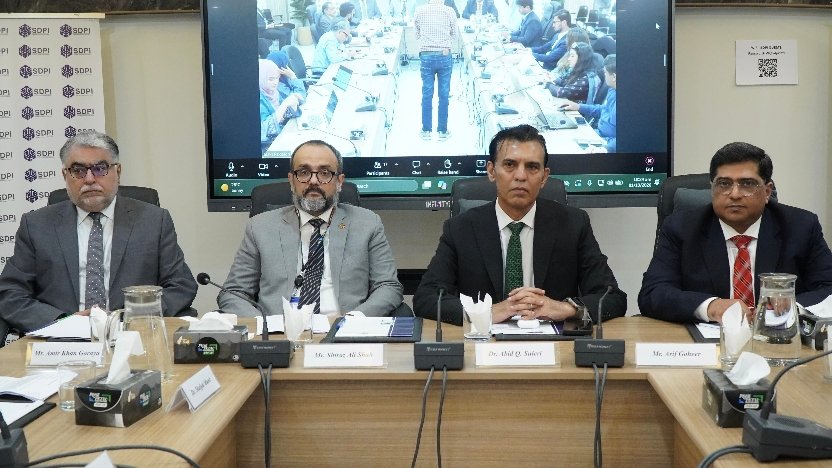
ISLAMABAD, Oct 1 (IN): Climate and energy experts, policymakers and development practitioners on Thursday urged Pakistan to approach COP31 with credible data, bankable projects and strong international coalitions, shifting its climate narrative from vulnerability to concrete action.The call was made at a Pre-COP Dialogue and Consultation titled “Pakistan’s Road to COP31,” organised by the Sustainable Development Policy Institute (SDPI) in collaboration with the Pakistan Renewable Energy Coalition (PREC).The dialogue focused on Pakistan’s key priorities for COP31, including climate finance, adaptation, mitigation, implementation of Nationally Determined Contributions (NDCs), renewable energy and coalition-building. Three policy papers covering climate mitigation, finance and adaptation were also launched on the occasion.
In his welcome remarks, SDPI Executive Director Dr Abid Qaiyum Suleri called for a tangible framework to deliver climate finance commitments agreed at Belém, while highlighting Pakistan’s rapid solar expansion as an achievement that should be sustained and promoted internationally.He also stressed the need for joint glacier management and data sharing among countries of the Hindu Kush Himalaya region, citing growing risks from glacier warming, landslides, flash floods and glacial lake outburst floods.Executive Director of the Global Climate Change Impact Studies Centre (GCISC) Arif Goheer said Pakistan should not approach COP31 solely as a vulnerable country, identifying evidence and data, investment, international coalitions, and federal-provincial implementation of NDCs as key priorities.CEO of the National Disaster Risk Management Fund (NDRMF) Aamir Goraya said climate finance was both a fiscal and environmental challenge, urging Pakistan to demonstrate its institutional capacity in disaster risk reduction and move its narrative “from vulnerability to action.
”SDPI Deputy Executive Director (Policy) Dr Shafqat Munir Ahmed said Pakistan’s climate negotiations should focus on loss and damage, adaptation and mitigation, while determining whether the country would merely highlight its vulnerabilities or actively engage in negotiations.PREC member Basit Ghauri highlighted Pakistan’s growing domestic solar uptake as an opportunity for clean electrification and called for stronger coalitions to access renewable energy financing.UNDP Pakistan’s Sheraz Ali Shah said Pakistan would go to COP31 with its NDC 3.0 and noted that the country had surpassed its unconditional targets under NDC 2.0. He described Antalya as an “implementation COP” focused on moving from plans to portfolios and stressed the need for grant-based adaptation finance.
Chairperson of the Pakistan Climate Change Authority (PCCA) Hamza Farrukh pointed to the significant gap between global adaptation finance and actual demand, calling for greater attention to mitigation and the development of a capable carbon market office.Other speakers, including SDPI’s Ubaid ur Rehman Zia and Zainab Naeem, PPMC’s Rabia Bukhari, Climate Finance Expert Sohail Malik and former ADB Executive Director Noor Ahmed, discussed geopolitical pressures, energy security, climate finance architecture, debt-for-nature swaps and the growing impacts of climate change.The speakers emphasised that Pakistan’s COP31 engagement should be backed by credible evidence, implementable projects, effective financing mechanisms and coordinated coalitions to translate climate commitments into tangible action.