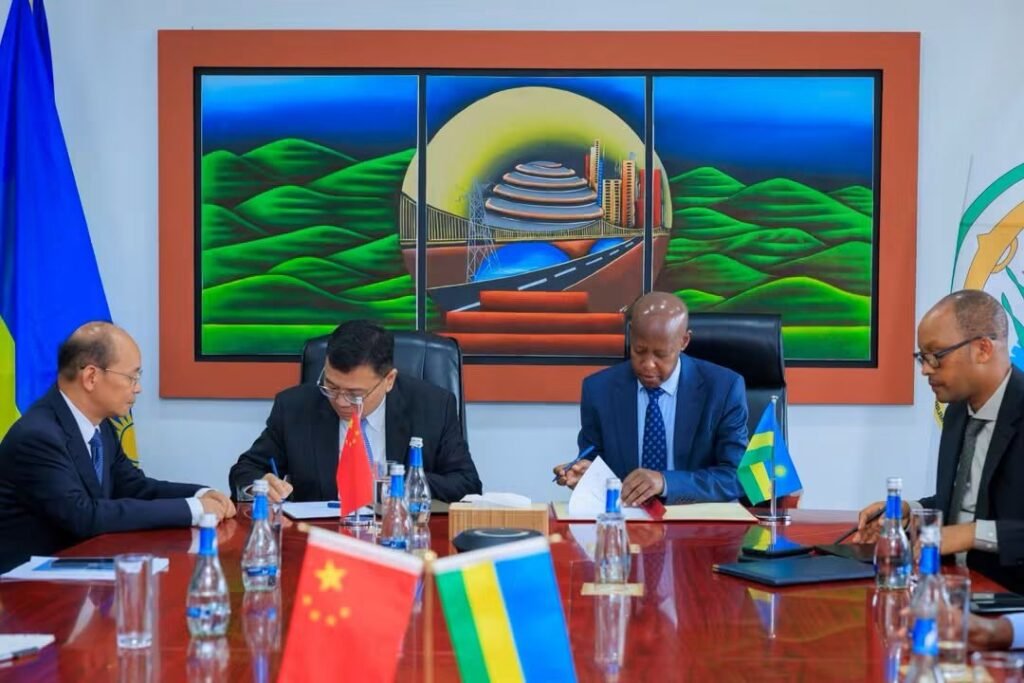


KIGALI: Rwanda has secured a €40 million (approximately Rwf67 billion) grant from the European Union to accelerate the transformation of its agricultural sector through climate-smart, sustainable, and inclusive farming practices.The financing agreement was signed by Yusuf Murangwa, Rwanda’s Minister of Finance and Economic Planning, and Belén Calvo Uyarra, the European Union Ambassador to Rwanda.
The five-year funding package will support the implementation of HANGARIBIHE: Transformational Climate-Smart and Inclusive Agriculture in Rwanda, a flagship initiative designed to increase agricultural productivity, strengthen resilience to climate change, and promote environmentally sustainable farming across the country.Under the agreement, €36 million will be provided as direct budget support to the Government of Rwanda to finance priority agricultural reforms and strategic investments.
The remaining €4 million will be allocated to technical assistance, institutional capacity building, and specialized studies to ensure effective implementation and long-term impact.The investment is expected to expand climate-smart agricultural practices, improve soil and water conservation, strengthen farmers’ ability to withstand climate-related shocks, boost agricultural productivity, and encourage sustainable management of natural resources.
It will also enhance the capacity of institutions responsible for delivering agricultural services and implementing key sector reforms.Speaking at the signing ceremony, Minister Yusuf Murangwa described the agreement as a significant milestone in Rwanda’s agricultural transformation.
“This partnership reflects our shared commitment to transforming Rwanda’s agriculture into a modern, inclusive, and climate-resilient sector that improves livelihoods while protecting the environment,” he said.The agreement highlights the European Union’s continued commitment to supporting Rwanda’s efforts to build a resilient agricultural sector capable of driving economic growth, improving food security, and addressing the growing challenges of climate change.