
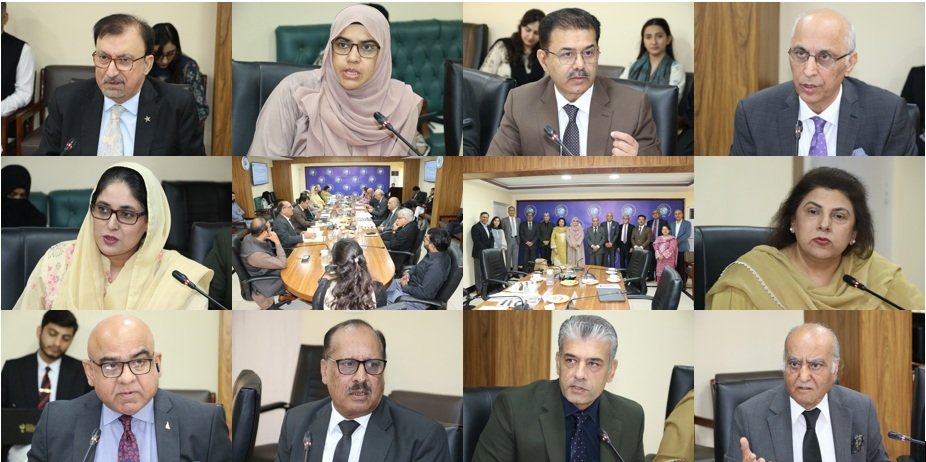
ISLAMABAD: The Institute of Strategic Studies Islamabad (ISSI) hosted a roundtable discussion on the evolving challenges posed by hybrid warfare, with experts emphasizing stronger national preparedness, strategic communication, cyber resilience and effective crisis-management mechanisms.The roundtable, titled “Hybrid Warfare and Pakistan’s National Security: Navigating the Cyber, Information and Diplomatic Nexus,” was organized by the Arms and Disarmament Centre (ACDC) of ISSI and attended by prominent strategic experts and academicians.
Speaking on the implications of evolving hybrid warfare techniques for strategic stability and deterrence in South Asia, Air Commodore (Retd.) Khalid Banuri, Senior Advisor, JCCL, said hybrid warfare had compressed decision-making timelines and reduced the space available for crisis management and diplomacy.He noted that cyber and information operations could increasingly intersect with strategic stability, creating additional complexities during crises.
He stressed the need for stronger communication mechanisms, verification of information before escalation and proactive measures to preserve stability.Ms. Adeela Waqar, Director Labs, PKCERT, highlighted vulnerabilities associated with critical infrastructure amid growing dependence on data, third-party services and interconnected digital systems. She emphasized integrating digitalization with resilience planning to ensure continuity of essential services during disruptions.Discussing the role of artificial intelligence in influence operations, Dr. Sumaira Kausar, Director CoE-AI, Bahria University, observed that AI could accelerate the creation and dissemination of both authentic and manipulated content. Such content, she noted, could quickly attract public and media attention, trigger diplomatic reactions and influence strategic decision-making.
Dr. Zahir Kazmi, Advisor SPD, underscored the importance of diplomacy and strategic communication in addressing hybrid warfare challenges, while stressing that these efforts needed to be supported by institutional resilience, credible capabilities and effective crisis management. He called for stronger coordination, verification mechanisms, regular exercises and pre-established communication channels.Dr. Zafar Ali, Director Research, SVI, and Dr. Bilal Zubair, Director Research, CISS, highlighted the growing importance of strategic communication in shaping domestic and international perceptions.
They stressed that citizens had increasingly become part of the hybrid information environment, requiring an audience-centric approach to national security.The speakers emphasized that addressing emerging hybrid threats requires resilient institutions, effective communication and narratives, greater public awareness, and stronger economic, political and social foundations.The roundtable provided a platform for experts to exchange views on emerging security dynamics and explore practical approaches to strengthening Pakistan’s national preparedness and resilience.