
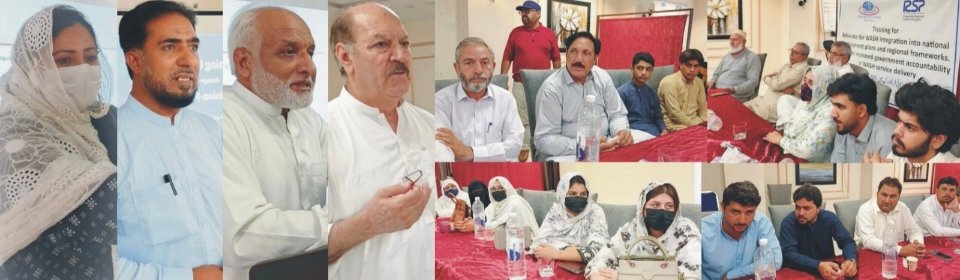
MARDAN: A one-day awareness and capacity-building workshop on the theme “Advocate for the Integration of WASH into National Development Plans and Regional Frameworks and Promote Government Accountability in WASH Service Delivery” was organized at a local hall in Mardan. The workshop was held with the support of the Fresh Water Action Network South Asia Pakistan (FWAN South Asia Pakistan) and under the auspices of the Integrated Regional Support Programme (IRSP).The primary objective of the workshop was to raise public awareness about Water, Sanitation and Hygiene (WASH), emphasize the importance of integrating WASH into national development planning, and strengthen government accountability by bringing together stakeholders from different sectors on a common platform.
The event was attended by a large number of men and women, students, youth, social activists, community representatives, members of civil society, teachers, representatives of local organizations, and people from various walks of life. Participants unanimously agreed that access to clean drinking water and adequate sanitation is a fundamental right of every citizen, and ensuring these essential services is the responsibility of the state.Addressing the participants, IRSP Executive Director Shah Nasir, along with Muhammad Ismail, Fayyaz-ul-Islam, and Nosheen Sardar, highlighted the critical importance of integrating the WASH sector into national and provincial development plans to achieve the Sustainable Development Goals (SDGs).Shah Nasir stated that sustainable development cannot be achieved without ensuring universal access to clean water, sanitation, and hygiene services. He stressed that if WASH initiatives are not effectively incorporated into development policies, it will become increasingly difficult to attain national goals related to public health, education, environmental protection, and economic growth.The speakers pointed out that access to safe drinking water and proper sanitation remains a significant challenge in Pakistan, contributing to the spread of waterborne diseases in many parts of the country. They emphasized that the government, local authorities, civil society organizations, educational institutions, and communities must work collectively to ensure that every citizen has access to safe drinking water, improved sanitation facilities, and basic hygiene services.
They further emphasized that transparency and government accountability in WASH service delivery can only be strengthened through public oversight, active community participation, and the meaningful engagement of civil society. Raising public awareness about citizens’ rights and the responsibilities of relevant government institutions is equally important for ensuring the effective implementation of development initiatives.During the workshop, participants received comprehensive briefings on Pakistan’s WASH policies, the Sustainable Development Goals, the impacts of climate change, efficient water resource management, improved sanitation systems, and the importance of public awareness. The speakers explained that climate change is placing increasing pressure on water resources and public health, making it essential to incorporate climate resilience into future planning and development strategies.Interactive sessions, including group discussions, question-and-answer segments, and practical exercises, enabled participants to learn effective advocacy techniques for promoting WASH initiatives within their communities. They were also guided on establishing productive engagement with relevant government departments and effectively highlighting public concerns to facilitate collaborative solutions.Participants described the workshop as highly informative and beneficial.
They pledged to play an active role in promoting clean water, sanitation, and hygiene in their respective communities, raise awareness among the public, and work alongside government institutions and civil society organizations to support initiatives aimed at building healthier, cleaner, and more sustainable communities.At the conclusion of the workshop, the speakers expressed optimism that stronger collaboration among the government, development partners, civil society organizations, and local communities would significantly improve the WASH sector. They noted that the effective integration of WASH into national development plans would not only enhance the quality of life for citizens but also contribute substantially to sustainable development, improved public health, environmental protection, and the achievement of Pakistan’s long-term development goals.