

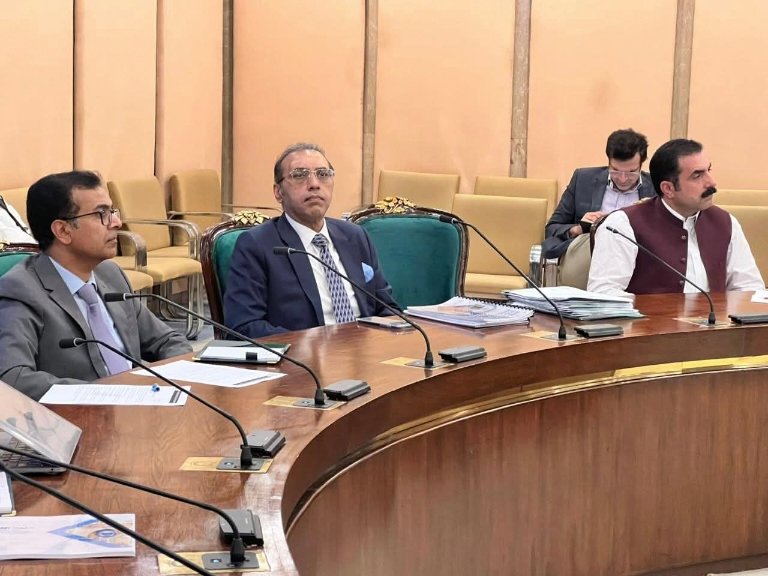
ISLAMABAD: President of the Rawalpindi Chamber of Commerce and Industry (RCCI), Usman Shaukat, participated in a meeting of the Senate Standing Committee on Finance and Revenue regarding recommendations for the Finance Bill 2026-27 at Parliament House. The session was chaired by Saleem Mandviwalla.
During the meeting, Usman Shaukat presented a comprehensive set of proposals aimed at improving Pakistan’s tax structure, boosting industrial growth, and enhancing export competitiveness.He recommended gradually reducing the effective GST rate from over 22 percent to 10 percent and lowering the corporate tax rate to 25 percent in phases to improve regional competitiveness.
He also called for increasing the minimum taxable income threshold to provide relief to the salaried class and urged stricter enforcement measures against persistent non-filers.To support exporters, he proposed reducing withholding tax on exporters from 2 percent to 1 percent, lowering advance tax on low-margin exports to 0.5 percent, and introducing incentives for businesses that increase exports by 15 percent or more. He further suggested tax incentives for industries reducing import dependency and restoring exemption certificates for advance taxpayers.Highlighting the need for ease of doing business, he emphasized simplifying tax filing through digital applications, expanding the faceless customs clearance system nationwide, and establishing a One Window Export Facilitation Portal.
Usman Shaukat also recommended removing restrictive provisions under Sections 8B and 73 of the Sales Tax Act, restoring transparent audit selection through computerized balloting, reducing discretionary powers of tax officials, and reviving the multi-tier tax appeal system for fair dispute resolution.Additionally, he proposed introducing taxpayer recognition cards under Silver, Gold, and Platinum categories, offering regionally competitive electricity and gas tariffs for industries, promoting renewable energy adoption through fiscal incentives, and formulating a 10-year National Industrial Policy to strengthen investor confidence.He also stressed the need to revive sick industrial units, privatize and restructure loss-making state-owned enterprises, and support local manufacturing, import substitution, and export diversification through sector-specific incentives for textiles, IT, pharmaceuticals, agriculture, engineering, mining, and the auto industry.