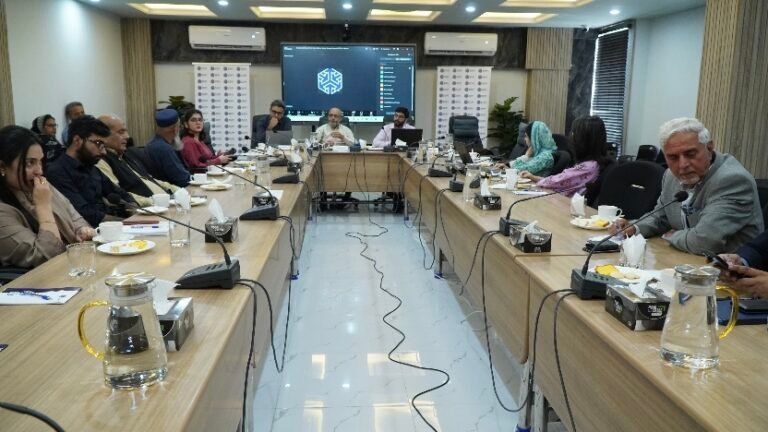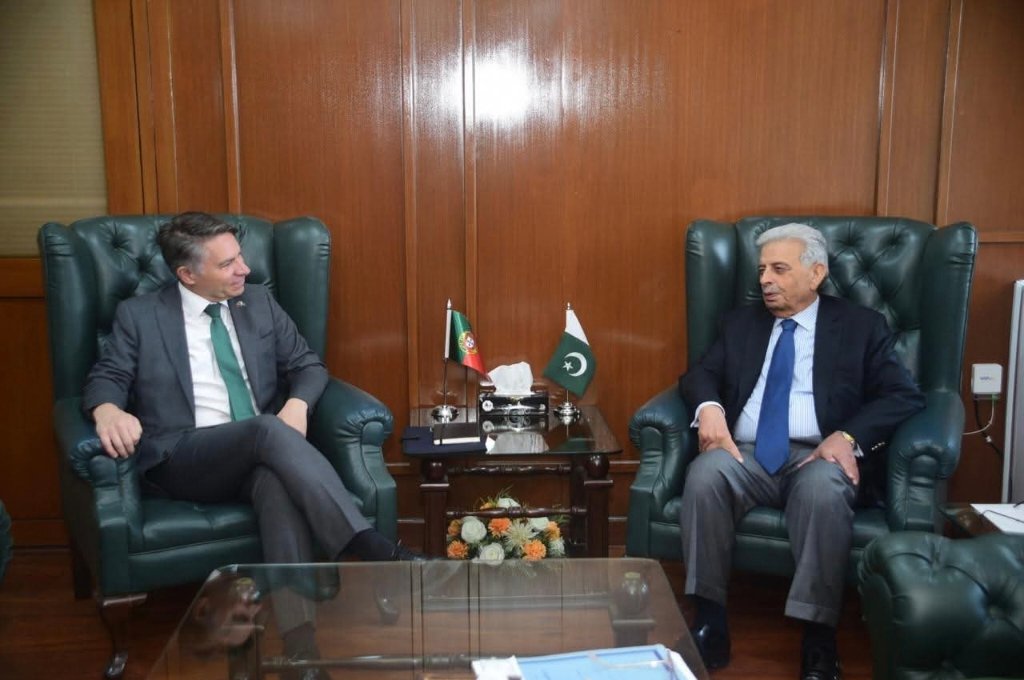

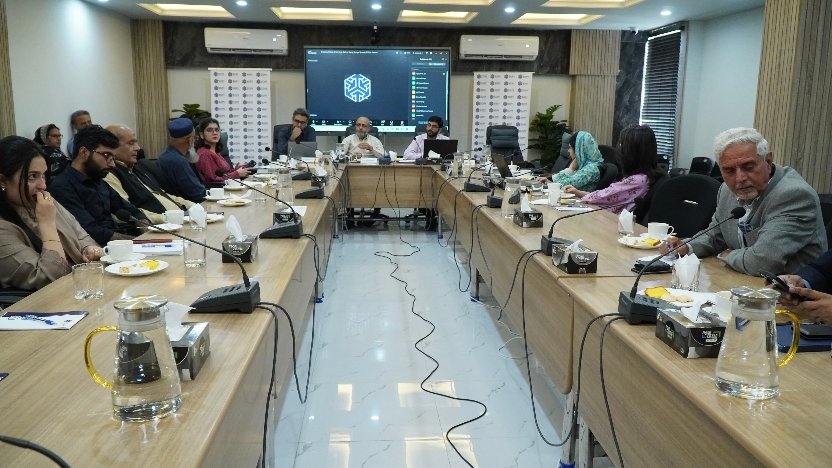
ISLAMABAD (21 Sept 2026): A study on the “Optimal Siting of Grid-Scale Battery Energy Storage Systems (BESS) in Pakistan,” has suggested a data-driven national roadmap to deploy storage technology and ease mounting grid constraints in Pakistan.The study conducted by Sustainable Development Policy Institute (SDPI) in collaboration with Network for Clean Energy Transition (NCET) was launched here on Monday. The event, held at SDPI, brought together experts, regulators and researchers to discuss how BESS can enhance grid flexibility, integrate Variable Renewable Energy (VRE), reduce curtailment, and address transmission bottlenecks, as the country pursues its clean energy transition.
Speaking on the occasion, Dr Kashif Imran, a Professor at US-Pakistan Centre for Advanced Studies in Energy, National University of Science and Technology (NUST), said the study offered valuable insight into optimal siting of BESS but pointed out continuing confusion around its deployment across the sector. He called for a three-tier approach to facilitate investors and noted that the study, though transmission-focused, had been conducted with limited available data, underscoring the need to harness data analytics more effectively.Dr Imran said BESS could also help reduce transmission losses and address voltage fluctuations, adding that since storage is not available round the clock, its applications should be combined to meet specific grid needs. He cited the TOPSIS method as one option for guiding BESS site selection and stressed the importance of reverse power flow analysis to identify problem locations on the network.
He added that with more comprehensive data, planners could arrive at a clearer, more complete picture for optimal BESS sizing.Presenting the study findings, Muhammad Umer, Research Associate at SDPI, said Pakistan’s power sector continues to face persistent Energy Not Served (ENS) losses amounting to 2.77 GWh. He said the study was designed around four core objectives: developing a data-driven siting framework for BESS, mitigating congestion and curtailment, building a business case for alignment with CPEC 2.0 investment, and formulating a policy and regulatory roadmap.He further said the research involved a preliminary network-wide screening of the National Grid Company’s 500 kV and 220 kV grid stations, using a ranking-based methodology to assess and compare candidate sites — including Shikarpur, Faisalabad, Dadu and Rawat — for optimal BESS deployment based on technical and locational parameters.Outlining the study’s policy recommendations, Umer called for mandating BESS modelling in the Indicative Generation Capacity Expansion Plan (IGCEP), integrating BESS into Transmission System Expansion Planning (TSEP) cycles, adopting bottom-up forecasting, and establishing a national BESS deployment roadmap. He also stressed the need to make BESS a bankable business model to attract Chinese B2B investors.On the regulatory and market side, he suggested creating a competitive ancillary services market, implementing Time-of-Use (ToU) and real-time pricing, facilitating long-term offtake agreements, and establishing a dedicated BESS investment facility.
He further called for formally classifying BESS in the regulatory framework, updating grid codes, establishing an independent flexibility provider category, developing a Renewable Energy Certificate (REC) and storage attribute framework, and maintaining strict quality and safety standards.During the question-and-answer session, Dr Imran reiterated that progress on BESS deployment must be grounded in technical data. Umer noted that the Independent System Market Operator (ISMO) had placed a 10 percent cap on storage/renewable integration, while the National Electric Power Regulatory Authority (NEPRA) maintains that its policies evolve over time. He said financing mechanisms remain critical to scaling up BESS, pointing out that the Public Sector Development Programme (PSDP) has allocated Rs500 million for a BESS project at Jhimpir.