
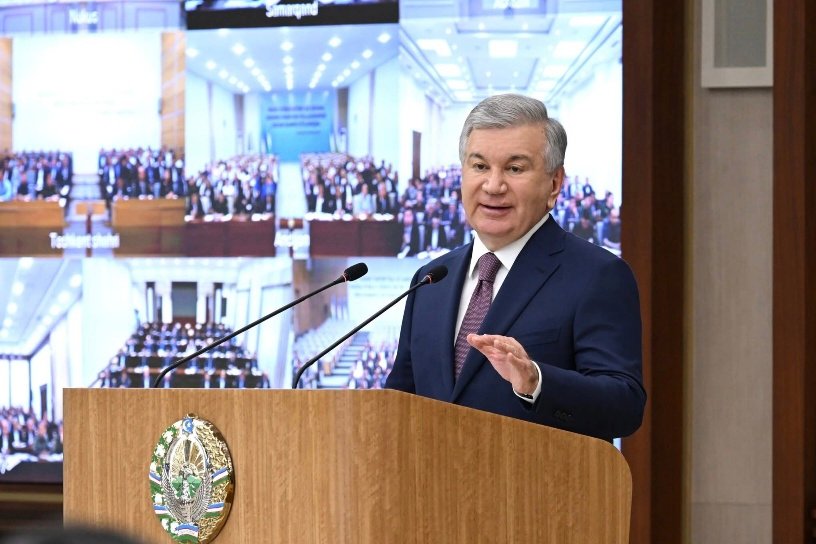
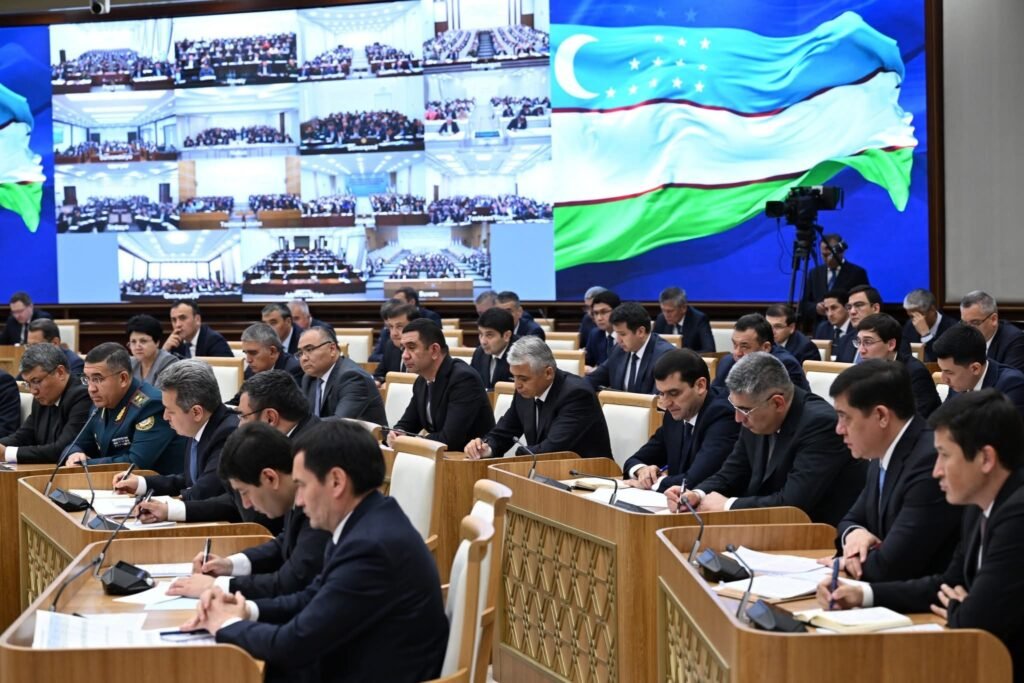
President Shavkat Mirziyoyev chaired a high-level videoconference to assess Uzbekistan’s economic performance in the first quarter of the year and outline key priorities for the months ahead.The meeting highlighted robust macroeconomic growth, with GDP rising by 8.7%, industrial output increasing by 8%, services surging by 16.1%, and agriculture growing by 5.1%. Exports reached $5.8 billion, while foreign investment climbed to $13.7 billion.
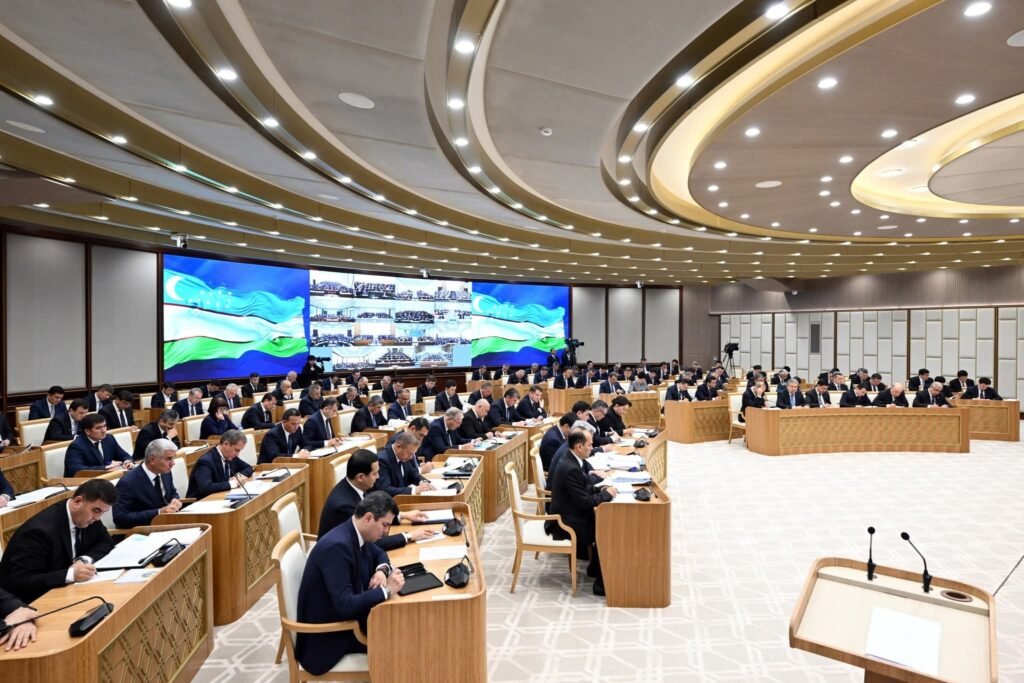
Notably, annual inflation dropped to 7.1%—its lowest level in recent years.Budget revenues for January–March grew by 35% year-on-year to 103 trillion soums, with local budgets receiving an additional 2.2 trillion soums. Districts and cities retained 1.4 trillion soums, strengthening regional financial capacity.The President underscored ongoing structural reforms aimed at elevating the economy, including plans to list 30% of state assets—worth $2.4 billion—on international stock markets. This move follows the establishment of the National Investment Fund and the transfer of management of 13 major enterprises to Franklin Templeton.
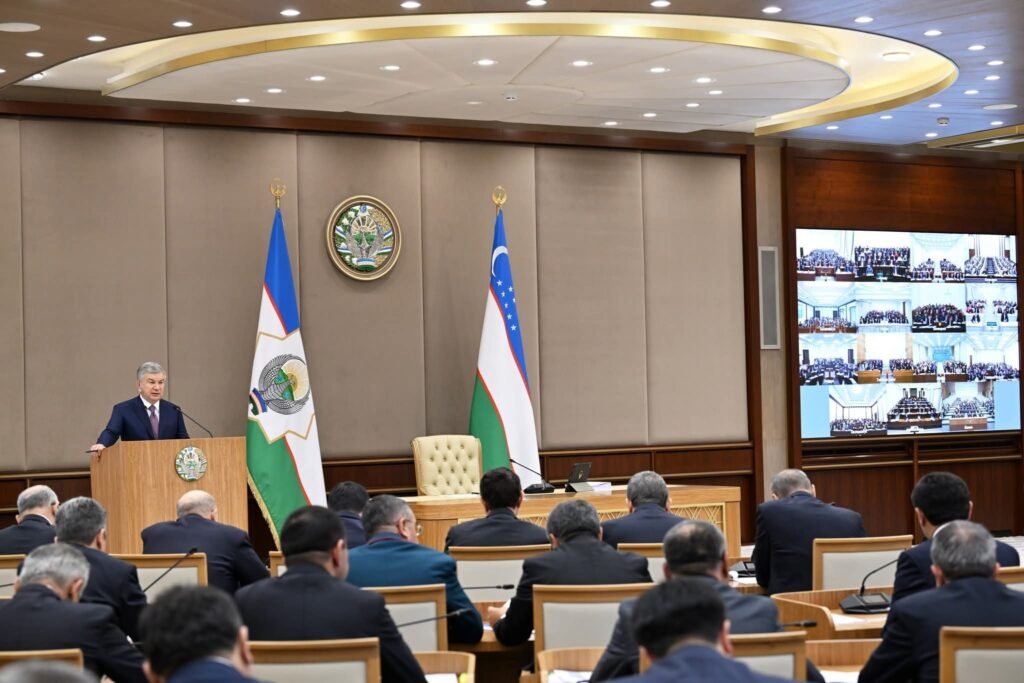
According to a recent report by the International Monetary Fund, Uzbekistan continues to demonstrate stable and dynamic growth, supported by strong economic activity. The country also climbed 14 positions in the Index of Economic Freedom, entering the category of “moderately free” economies for the first time.Despite these achievements, President Mirziyoyev warned against complacency, citing growing global uncertainties, rising geopolitical tensions, and increasing competition in the global economy. He called for a shift in leadership approaches to adapt to these evolving challenges.A major focus of the meeting was support for small and medium-sized enterprises (SMEs), with 140 trillion soums allocated through banks this year.
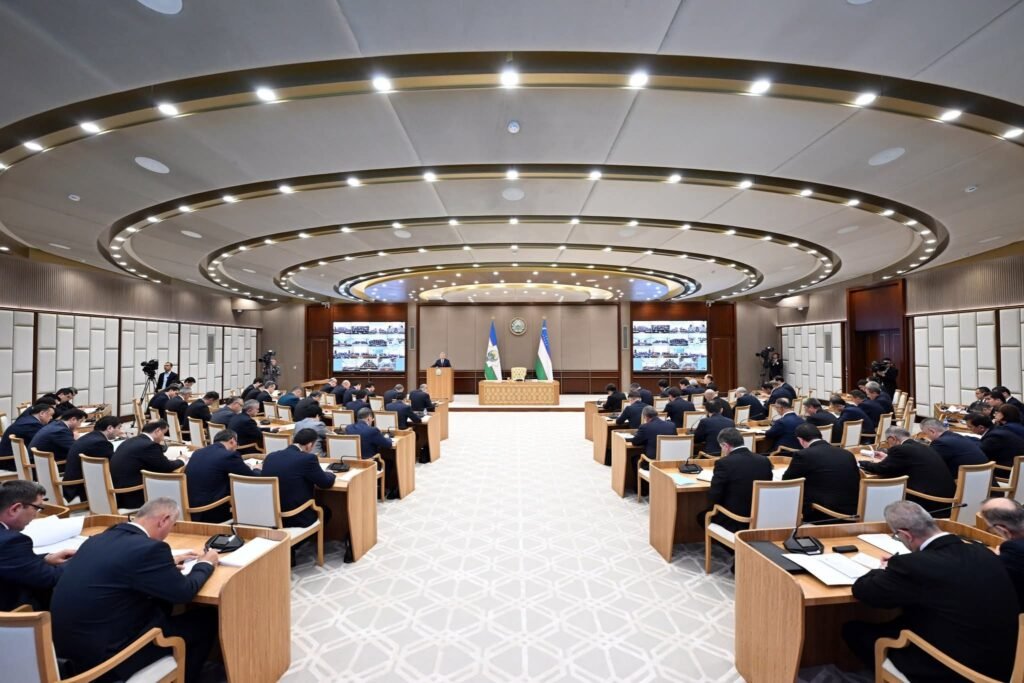
Job creation efficiency varied significantly across regions, prompting the government to push for the adoption of artificial intelligence in credit allocation. Banks will introduce an “AI Consultant” platform to help entrepreneurs assess risks, market demand, and financing options.The President sharply criticized bureaucratic inefficiencies, noting cases where officials failed to support entrepreneurs and instead avoided accountability. Several regional leaders were warned, and performance reviews were ordered in underperforming districts.Inflation control was identified as a top priority. Rising global oil prices—up 40%—and increased logistics costs of 25–30% have added pressure on domestic prices. Authorities were instructed to boost domestic production, which accounts for 70% of the consumer basket, to maintain inflation at 6.5% this year.Food security also received urgent attention. Due to disruptions in livestock imports, new measures include subsidies for air transport of breeding cattle and partial reimbursement of meat import costs. Uzbekistan aims to import 130,000 tons of meat by year-end.Agricultural shortcomings were highlighted, including delays in sowing forage crops and underutilized land in several regions.
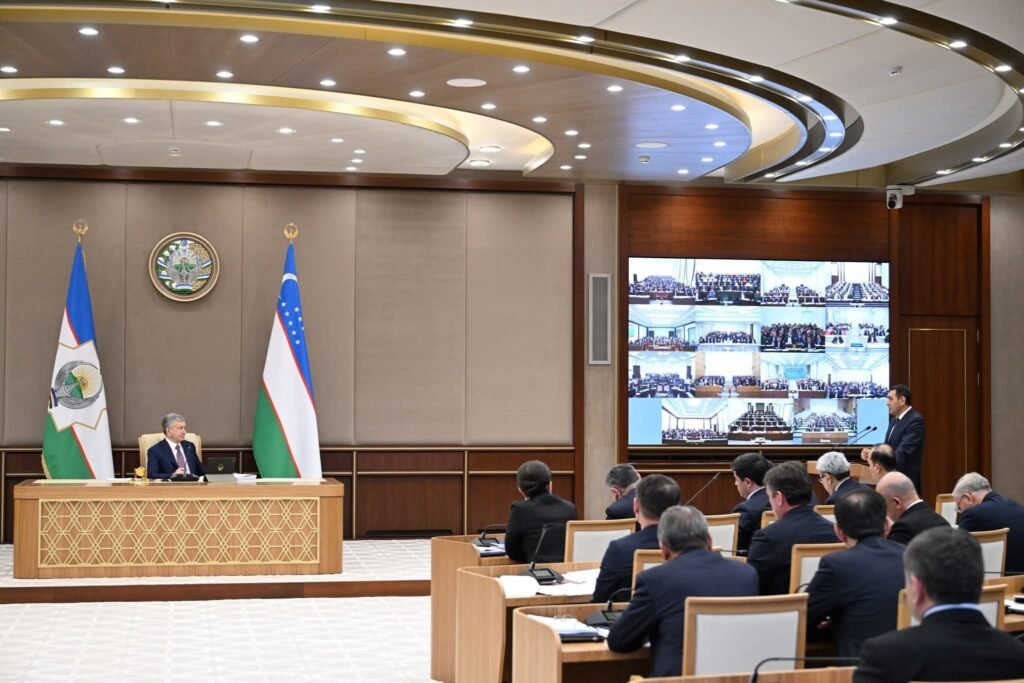
The government plans to auction an additional 100,000 hectares of land and promote large-scale industrial orchards and vegetable plantations.Industrial performance and export targets were also reviewed. Several districts failed to meet production goals, and disciplinary measures were ordered. The electrical engineering sector underperformed, prompting directives to boost output to 25 trillion soums and exports to $1 billion by mid-year.The meeting further addressed inefficiencies in industrial zones, where many projects have yet to begin despite completed infrastructure. Officials were tasked with developing project pipelines to utilize these zones effectively.Efforts to optimize government operations were also discussed.
A nationwide plan to relocate government offices into centralized administrative hubs is expected to save energy, reduce costs, and free up 5 million square meters of space for business use.On investment, the President emphasized quality over quantity, stressing that every project must generate added value, jobs, and export potential. A new AI-driven platform will guide investment decisions by analyzing production capacity and market demand.Out of more than 18,000 foreign-invested enterprises, hundreds remain inactive in exports or rely solely on imports.
Authorities were instructed to integrate these businesses into local production and export networks through targeted programs.The expansion of “Smart District” platforms and situational analysis centers was also prioritized, with regional leaders directed to replicate successful models within two months.Concluding the meeting, President Mirziyoyev stressed that all officials bear personal responsibility for achieving economic growth, controlling inflation, creating jobs, boosting exports, and improving the investment climate in an increasingly challenging global environment.