
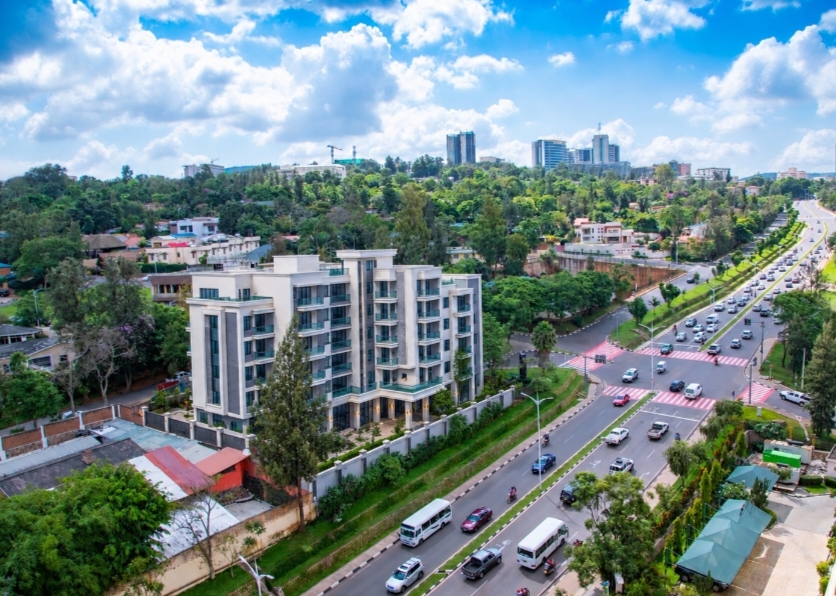
KIGALI: Rwanda has maintained its ‘B+’ long-term sovereign credit ratings in both foreign and local currencies, with a Stable Outlook, following the latest assessment by S&P Global Ratings published on November 16, 2026.The ratings agency said Rwanda’s resilient economic performance, improved fiscal position, prudent financial management and continued access to low-cost concessional financing underpin the country’s stable credit outlook.According to S&P, Rwanda has demonstrated a strong track record of balanced economic growth and sound financial management. The country’s debt structure also compares favourably with that of similarly rated economies, with more than 87 percent of its external debt carrying low interest rates and long-term repayment terms.Rwanda’s economy recorded impressive growth of 10 percent year-on-year during the first half of 2026, following 9.3 percent growth in 2025. S&P projects economic growth of 7.5 percent in 2026 and an average of around 7 percent annually between 2027 and 2029, outperforming many countries with similar credit ratings.The construction of the New Kigali International Airport (NKIA) remains a major driver of economic activity, with full commercial operations expected to begin in mid-2028.On the fiscal front, S&P estimates Rwanda’s budget deficit for the 2025/26 financial year at approximately 4.9 percent of GDP, significantly below the government’s initial target of 5.7 percent. Higher-than-expected tax revenues and lower-than-budgeted expenditure, particularly on airport financing, contributed to the improved fiscal performance.
The agency also highlighted Rwanda’s innovative financing arrangement for the airport project, supported by the World Bank Group Guarantees Platform through an IDA policy-based guarantee combined with a MIGA guarantee. Rwanda became the first country to utilise this financing structure, reducing expenditure on Phase II of the airport project in 2026 by Frw 168.2 billion.Furthermore, Rwanda successfully met all performance targets under the first review of its 38-month International Monetary Fund (IMF) programme, with the first disbursement released in October.The country’s external financial position has also strengthened. Remittances from Rwandans living abroad increased by 31.1 percent year-on-year in the first half of 2026, while mineral exports recorded strong growth. These developments helped narrow the external deficit to 10.9 percent of GDP, compared with 13.4 percent in the corresponding period last year.S&P noted that the Rwandan franc has remained broadly stable and expects usable foreign exchange reserves to average approximately US$2.3 billion over the 2026–2029 period.
Addressing external economic challenges, the agency acknowledged that ongoing conflict in the Middle East has increased prices of fuel, fertilisers and food. However, the government has introduced targeted diesel and fertiliser subsidies, while the National Bank of Rwanda has tightened credit conditions. Inflation is expected to ease to around 8 percent in 2027.S&P’s latest assessment underscores Rwanda’s continued commitment to sound economic governance, responsible debt management and fiscal discipline as the country advances its long-term development agenda.