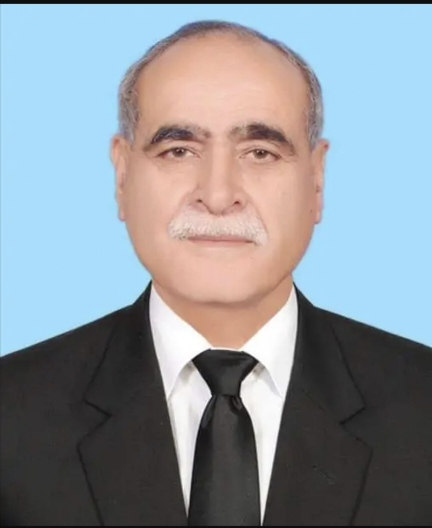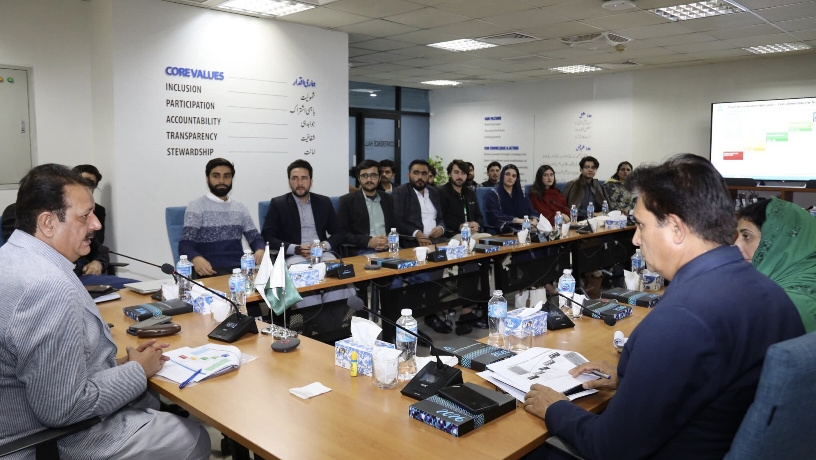


ISLAMABAD (24 November 2026): Federal Minister for Law and Justice Senator Azam Nazeer Tarar has said that maintaining a constitutional balance between the fundamental rights of freedom of expression and access to information alongside the protection of citizens’ privacy, honour, reputation and dignity, is imperative in the digital era.He was speaking at an international seminar, titled: ‘Social Media Platforms and the Post-truth Era’, organized by the Sustainable Development Policy Institute (SDPI) here on Tuesday.He further said digital challenges cannot be met through regulations or static policies alone, that’s why all the stakeholders, including social media platforms, professionals, regulators and viewers, must consider what constitutes responsible behaviour.the Federal Minister stated that rapid technological transformation enables false or fake news to spread within seconds, acting like a fired bullet whose consequences cannot be undone once disseminated.Referring to the Constitution of Pakistan, Senator Tarar noted that Articles 4, 9 and 14 guarantee the inviolable protection of life, liberty, honour, reputation and dignity to every individual on Pakistani soil, whereas Articles 19 and 19-A subject the rights of expression and information to reasonable legal restrictions to safeguard personal privacy, national security and institutional integrity.
Citing international precedents, the Minister highlighted that the European Union, the United Kingdom and regional countries have enacted stringent regulations to protect their citizens, particularly women and children, from the onslaught of online misinformation. He said after 18 months of extensive deliberations and consultations with journalists, experts and global tech representatives, including Meta and Asia Internet Coalition, Pakistan revamped its regulatory framework, established the Social Media Regulatory Authority and reformed the Prevention of Electronic Crimes Act (PECA) by harmonizing international standards with Pakistan’s unique security and societal challenges.SDPI Executive Director Abid Qaiyum Suleri, in his concluding remarks, emphasized on four points. “First, global operations must come with local accountability. Social media companies derive commercial benefits from their users in Pakistan. Pakistani citizens should have access to the same quality of protection, responsiveness and grievance redress that these companies provide in other jurisdictions such the EU. Second, we need to distinguish between freedom of expression and freedom from accountability. These are not either-or, rather both should go hand in hand. Legitimate dissent, political criticism and independent journalism must remain protected.
Terrorist recruitment, incitement to violence, deliberate defamation and other unlawful activities require effective legal remedies. Third, cooperation between governments and social media platforms must extend beyond crisis management. We need institutionalized arrangements, accessible local representation, designated focal persons, time-bound responses to lawful requests and adequate content moderation in local languages. Finally, the responsibility for combating disinformation is shared. That is why we had federal and provincial ministers, KP Governor, and representatives from social media platform here.”Dr Suleri said that SDPI as an independent policy research institution will consolidate today’s deliberations, identify areas of convergence and disagreement, and develop actionable policy recommendations. I would also propose that we establish a structured follow-up mechanism involving the relevant ministries, regulators, social media companies, media representatives and civil society, Dr Suleri concluded.Federal Minister for Interior Mohsin Naqvi said the government has four red lines for online content. i.e. terrorism, hate speech, incitement to violence and the sexual exploitation of children. He said Pakistan has paid for terrorism with lives and that platforms act on 47 per cent of the requests made by the counter-terrorism department.
He said free speech should not be curtailed and that dissent, including against the government, must remain possible, but that it cannot shield those who cross these lines.Mr Naqvi said the National Cyber Crime Investigation Agency has limited manpower, citing 61 personnel, including drivers and clerks, covering Punjab’s population of about 140 million. He said the Social Media Protection Regulatory Authority was set up to address this. Under the proposals he outlined, platforms, over-the-top services and major content creators would register with the authority, each platform would name an empowered representative for Pakistan, and NCCIA complaints would move to the PakID app, with a single tracked complaint system to follow.He said enforcement would proceed in steps, from engagement to notice to action, with blocking an entire platform kept as a last resort and any such request made clear, lawful and public. He said the government would check on Dec 30 whether action had been taken.Faisal Karim Kundi, the Governor of Khyber Pakhtunkhwa, a special guest at the seminar, said false information can now reach millions of people within seconds, complete with a face, a voice, and apparently convincing evidence, and that distinguishing truth from falsehood has become increasingly difficult.Mr Kundi said the province has made many sacrifices in the war on terror and that violence is often preceded by the spread of hatred, extremism and misleading narratives. He said social media has become an important tool for such propaganda aimed at young people. He described freedom of expression as the foundation of democracy and said every citizen has the right to ask questions and criticize the government, but that it cannot be used to justify terrorism, violence, hatred or misleading propaganda.
The governor said Khyber Pakhtunkhwa should be presented as a destination for peace, tourism, trade and technology rather than as a region associated with terrorism. He said building a positive image takes years, while a single piece of fake news can damage it quickly, and that tourists and investors increasingly form opinions through digital platforms.He said platforms operate globally but their effects are felt locally, and that citizens facing online harassment, threats, fraud or defamation need an effective mechanism for prompt complaints and access to justice. He said the Prevention of Electronic Crimes Act 2016, amended in 2025, should be implemented fairly and transparently, and that the challenge cannot be met by a single restriction but requires joint efforts by the government, platforms, the media, researchers and civil society