
By Sardar Abdul Khaliq Wasi
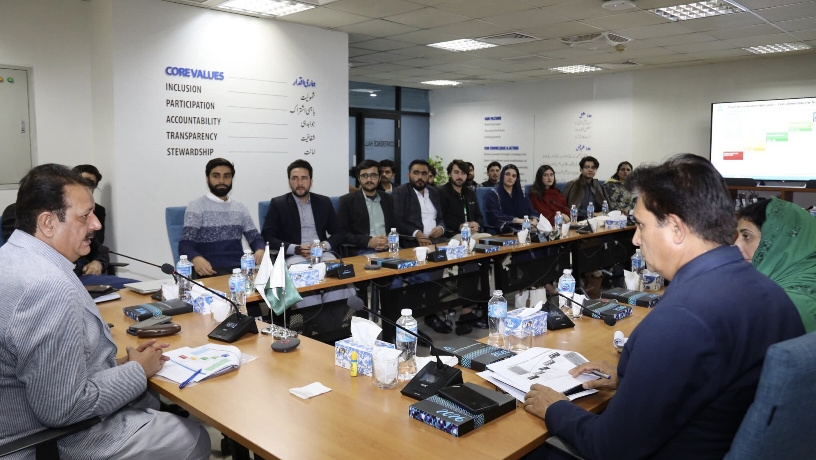
The visit of Pakistan’s Federal Minister for Climate Change and Environmental Coordination, Dr Musaddiq Malik, to India was intended to promote cultural understanding through the Shanghai Cooperation Organisation (SCO) Forum on Civilisational Dialogue. However, sections of the Indian media and political establishment appeared more interested in turning his visit into a political controversy than recognising its diplomatic and cultural significance.The forum was intended to bring nations together to discuss shared history, cultural heritage, mutual respect and regional cooperation. Yet, the arrival of a Pakistani minister became a subject of criticism, speculation and anti-Pakistan commentary in certain Indian media circles.The visit was particularly significant as it marked the first such visit by a Pakistani federal minister to India following the military confrontation between the two countries in May 2025. Given the prevailing political environment, expectations of a major diplomatic breakthrough may have been unrealistic.
Nevertheless, turning participation in an international forum into a domestic political controversy reflected neither diplomatic maturity nor responsible journalism.From the outset, sections of the Indian media focused on Dr Musaddiq Malik’s previous statements concerning Pakistan’s water rights and the Indus Waters Treaty. Rather than discussing the purpose of his participation, television debates questioned why a Pakistani minister with strong views on India’s water policies had been allowed to visit.Some opposition leaders, particularly from the Congress, also criticised the Indian government, portraying the visit as an inconsistency in its Pakistan policy. This reaction demonstrated how Pakistan-related diplomatic matters frequently become instruments of domestic political competition in India.Continuity in India’s Approach Towards PakistanA fundamental reality deserves attention: whether the Indian National Congress or the Bharatiya Janata Party is in power, there has been little substantive change in India’s political approach towards Pakistan. Although political language and methods may differ, considerable continuity remains in the treatment of Pakistan.More than seven decades after its establishment, Pakistan has firmly established itself as an independent and sovereign state in the international community. Yet, sections of India’s political establishment continue to view Pakistan through the prism of historical grievances, domestic political interests and strategic rivalry rather than consistently treating it as an equal sovereign neighbour.
The issue is not simply whether successive Indian governments have acknowledged the historical reality of Pakistan’s existence, but whether they have genuinely accepted the principles of sovereign equality and mutual respect. Kashmir, water rights, trade and regional cooperation repeatedly become casualties of domestic political calculations. Meaningful improvement in bilateral relations therefore requires a change in political attitudes, not merely a change of government in New Delhi.Cultural Dialogue and Contradictory AttitudesCertain Indian media outlets also gave disproportionate attention to personal aspects of the visit, including the presence of the minister’s wife and reports concerning possible shopping activities. Such coverage diverted attention from the actual purpose of his official engagement and raised questions about journalistic priorities.Another reported aspect was particularly revealing. Dr Musaddiq Malik expressed a desire to visit the Taj Mahal and the shrine of Hazrat Nizamuddin Auliya but, according to media reports, was not permitted to visit locations outside the official SCO programme.The Taj Mahal represents universal cultural heritage, while the shrine of Hazrat Nizamuddin Auliya symbolises the subcontinent’s rich Sufi tradition, spiritual harmony and humanity.
While security and administrative considerations may be legitimate, restrictions on such visits inevitably raise questions about the practical commitment to the very idea of civilisational dialogue.Pakistan’s Constructive Diplomatic MessageIn contrast to the controversy surrounding his visit, Dr Musaddiq Malik’s message remained focused on dialogue, cultural harmony and shared human interests. He emphasised that civilisations transcend geographical boundaries and that the region’s history, culture and human relationships are deeply interconnected.He also highlighted climate change as a common challenge, explaining that floods, natural disasters and environmental crises recognise neither political boundaries nor national differences. His message was consistent with the objectives of the SCO forum and reflected Pakistan’s willingness to engage constructively on shared regional concerns.Significantly, the Indian Ministry of Culture’s official communication acknowledged positive elements of his address, including appreciation of the hosts’ hospitality and respect for different civilisations and identities. This indicated that the official response was not entirely consistent with the negative tone adopted by sections of the media.Dialogue Is Not WeaknessDiplomacy is not merely about resolving disputes through immediate agreements. It is equally about keeping channels of communication open, particularly when political and strategic differences are profound.
The SCO provides a platform where Pakistan and India, despite their bilateral disagreements, can engage on common challenges. Participation in such forums should never be interpreted as weakness or compromise on national interests.Pakistan’s diplomatic position has consistently emphasised regional peace, sovereignty, national security and peaceful resolution of disputes. Presenting its position firmly while participating in dialogue demonstrates confidence and maturity. National dignity does not require closing every door to communication; it requires defending national interests with wisdom and conviction.Pakistan and India share a complicated history of conflicts and disagreements, but they also share languages, literature, music, traditions, Sufi heritage and deep human connections. These common bonds should not be sacrificed at the altar of political hostility.
Dr Musaddiq Malik’s visit may not produce an immediate diplomatic breakthrough, but it provided an opportunity for Pakistan to represent itself at an important international forum with dignity and composure.The future of South Asia requires political maturity, mutual respect and a willingness to recognise each other’s legitimate interests and sovereign standing. Civilisational dialogue cannot remain a ceremonial slogan; it must translate into practical attitudes and responsible conduct.Peace is built not merely through speeches and conferences, but through tolerance, respect and the courage to keep dialogue alive despite differences.