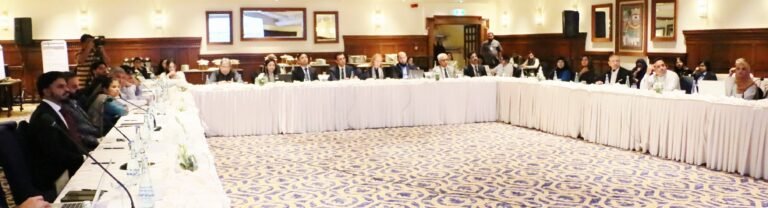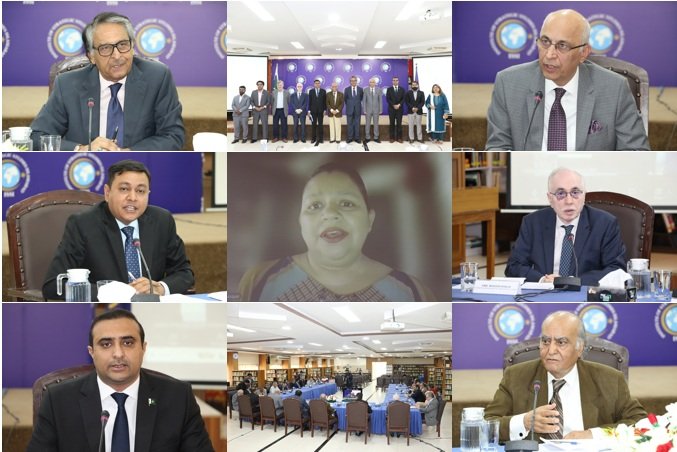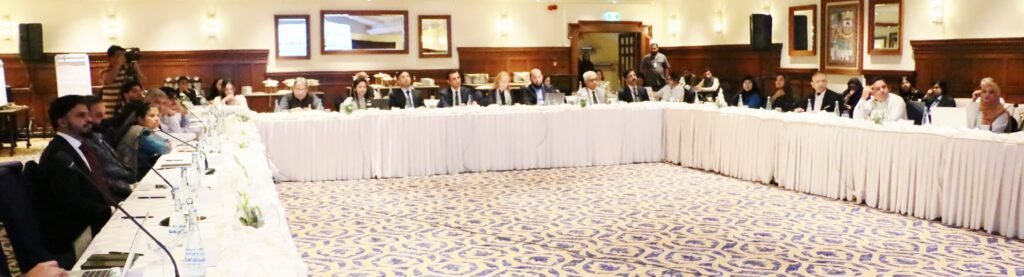

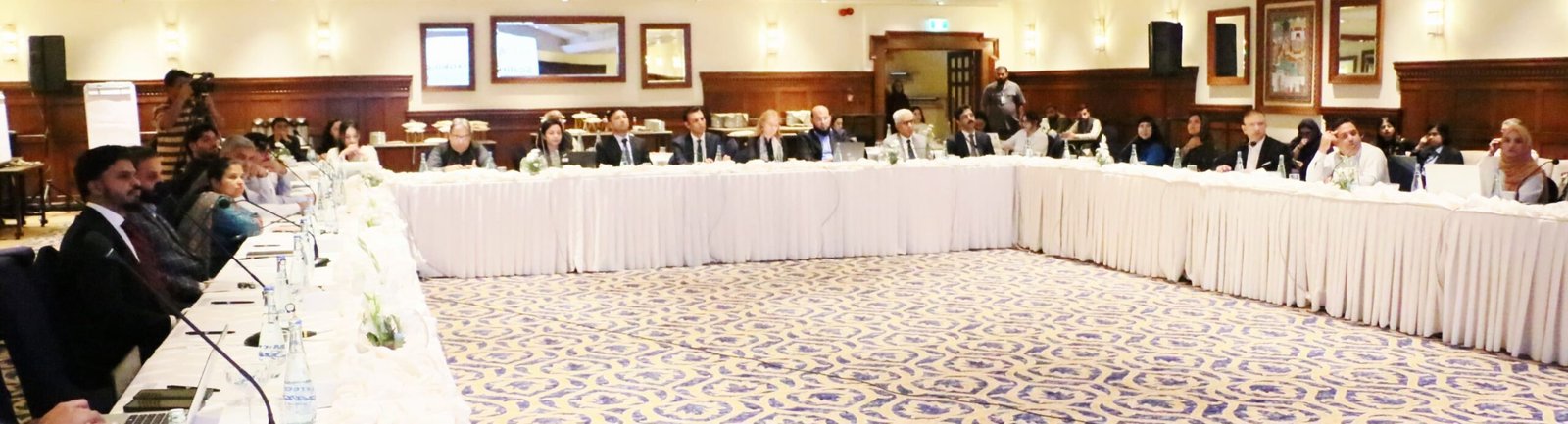
ISLAMABAD, October 15: Energy experts and policymakers have called for scaling up electric cooking in Pakistan, urging the government to introduce supportive policies, affordable financing and locally manufactured appliances to reduce dependence on imported gas and traditional fuels while curbing household air pollution.The call was made at a national consultative workshop titled “Scaling E-Cooking Access in Pakistan,” jointly organised by the National Energy Efficiency and Conservation Authority (NEECA) and the Sustainable Development Policy Institute (SDPI), with support from the United Nations Economic and Social Commission for Asia and the Pacific (UNESCAP), the Modern Energy Cooking Services (MECS) programme and UK International Development.The consultation brought together representatives from government institutions, the private sector, academia, civil society and the media to review pilot project findings and develop policy recommendations for Pakistan’s national e-cooking roadmap.In his opening remarks, SDPI Executive Director Dr Abid Qaiyum Suleri said millions of rural households continued to rely on biomass for cooking, exposing families to carbon monoxide and other harmful pollutants while increasing the burden on women, who often spend considerable time collecting fuel and preparing meals.
He said persistent gas shortages in major cities, including Karachi and Lahore, coupled with high liquefied natural gas (LNG) prices, had further strengthened the case for promoting electric cooking as a cleaner and more reliable alternative.Dr Suleri noted that Pakistan’s growing solar power capacity and surplus electricity offered an opportunity to expand e-cooking, reduce dependence on imported gas and make better use of available energy resources. He also highlighted the financial burden of capacity payments to independent power producers, even when their electricity was not purchased.He stressed the need for affordable electric stoves equipped with appropriate safety features and labelling, adding that local manufacturers and industrial clusters, particularly in Gujranwala, could help produce or assemble appliances tailored to Pakistani cooking practices.He urged the government to introduce incentives for electricity consumption during winter to encourage electric cooking and reduce foreign exchange expenditure on LNG imports. He added that SDPI would continue supporting advocacy, legislative engagement and community-level initiatives, while NEECA and other relevant institutions could take the pilot project forward.Fadia Ahmadi, Economic Affairs Officer at the UNESCAP Energy Division, said clean cooking had historically received less policy attention than electricity access, despite its significant implications for public health and sustainable development.
She said access to clean cooking in Asia and the Pacific had reached approximately 79 per cent in 2023, yet nearly one billion people in the region remained without access. Pakistan was among six countries accounting for three-quarters of those lacking clean cooking facilities, she added.Highlighting the health and social consequences, Ms Ahmadi said household air pollution was associated with an estimated 2.9 million premature deaths annually worldwide, disproportionately affecting women and children. She added that time spent collecting fuel and cooking also restricted opportunities for education and income generation.She said UNESCAP had supported Sustainable Development Goal 7 roadmaps since 2019 and had undertaken clean-cooking initiatives in several countries, including Pakistan, Bhutan, Nepal, Lao PDR, Fiji and Tajikistan.Moderating the opening plenary, Engr Ubaid ur Rahman Zia, Head of the Energy Unit at SDPI, said encouraging market signals were emerging for electric cooking appliances, similar to those previously witnessed in the solar photovoltaic sector.He said an SDPI market study, conducted in collaboration with UNESCAP under NEECA’s guidance, had identified new electric cooking products entering the Pakistani market, including locally manufactured and assembled appliances.He recalled that Pakistan’s clean-energy planning process had advanced through the SDG7 Roadmap, launched with the involvement of UNESCAP, the Private Power Infrastructure Board and SDPI, and said the country had made progress in electricity access and clean cooking.
Alicia Butterfield, Global Manager of the Global Electric Cooking Coalition (GECCO) Secretariat, based with the MECS team at Loughborough University in the United Kingdom, described electric cooking as an efficient and potentially cost-effective alternative to conventional cooking fuels.She said the focus of clean-cooking initiatives was increasingly shifting from small-scale pilot projects towards large-scale deployment, with consumer awareness and behavioural change playing a critical role in the transition.Ms Butterfield said GECCO, established in 2023, had expanded to include 37 members and 13 member countries, with funding secured until 2030. She also highlighted Pakistan’s reported solar photovoltaic capacity of around 50 gigawatts as a significant opportunity to support the transition towards electric cooking.Dr Jamsheed Ali, Joint Director Policy at NEECA, called for stronger policy interventions, improved financing mechanisms and closer coordination between federal and provincial stakeholders to accelerate the adoption of clean cooking technologies.Presenting an analysis of clean-cooking trends, he said Pakistan’s access to clean cooking stood at approximately 51 per cent, compared with more than 80 per cent in India and 92.8 per cent in Bhutan.He noted that Pakistan and India had comparable levels of clean-cooking access in 2000, but India made considerably greater progress after 2011. He urged researchers and policymakers to examine the factors behind India’s advancement and Bhutan’s performance to identify approaches that could be adapted to Pakistan’s circumstances.Dr Jamsheed emphasised that closing the clean-cooking gap would require a supportive policy framework, accessible financing and stronger partnerships among government agencies, businesses, financial institutions and development partners.
In his concluding remarks, SDPI Senior Policy Advisor Noor Ahmed thanked the partner organisations and federal and provincial departments for participating in the consultation. He said the discussions had generated practical recommendations and examined the economic opportunities associated with the sector.He identified the large-scale market rollout of clean-cooking equipment as a key remaining challenge, stressing that wider adoption of electric cooking could improve household living conditions, reduce exposure to harmful pollutants and support Pakistan’s broader energy transition.