
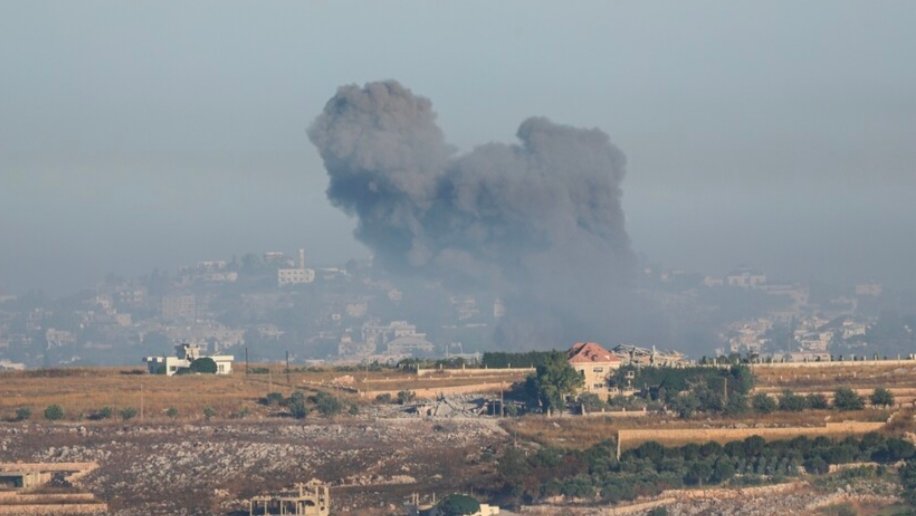
BEIRUT: Despite the regional ceasefire and the reported US-Iran agreement—mediated by Pakistan and said to include Lebanon—Israeli military operations continued across southern Lebanon on Friday, while political divisions over the ceasefire emerged within Israel’s cabinet.According to Lebanon’s National News Agency (NNA), Israeli warplanes carried out two separate airstrikes targeting the outskirts of Upper Nabatiyeh earlier in the day. Later, Israeli artillery fired around ten shells toward the areas surrounding the towns of Barashit and Beit Yahoun, while machine-gun fire was also directed at Beit Yahoun.
In the town of Mansouri, an unexploded remnant of war detonated, killing one person and seriously injuring another. The town had been repeatedly targeted during previous Israeli military operations, and residents had only recently begun returning to their homes following the ceasefire.On Thursday, two people were also killed in an Israeli drone strike targeting a vehicle in the Meyfedun area of Nabatiyeh.Meanwhile, local sources reported that Israeli forces detained six agricultural workers—three Lebanese and three Syrians—near Ayn Arab in southern Lebanon after residents began returning to the area on June 24. Their whereabouts remain unknown. Ayn Arab lies within the “Yellow Line” zone, which remains under Israeli military control.Israeli drones also dropped warning leaflets over Mansouri near Tyre, urging residents to avoid areas where Israeli troops were deployed and warning that approaching those locations could endanger their lives.
The renewed military activity came despite the June 14 announcement by Iran and the United States that they had reached a 14-point agreement, reportedly mediated by Pakistan, to halt hostilities and pursue negotiations, with the understanding that the ceasefire would also extend to Lebanon.At the political level, disagreements over the Lebanon ceasefire reportedly intensified during an Israeli cabinet meeting. According to Israeli media, National Security Minister Itamar Ben-Gvir called for abandoning the ceasefire following the wounding of Israeli soldiers in southern Lebanon, arguing that Israel should expand its military operations.
National Mission Minister Orit Strook supported Ben-Gvir’s position, saying Israeli troops in Lebanon “feel like they are in a shooting range” and should respond immediately to every threat.Israeli Chief of Staff Eyal Zamir responded by reminding ministers that the government itself had approved the ceasefire. Prime Minister Benjamin Netanyahu and Defense Minister Yisrael Katz defended the truce, maintaining that Israeli forces retain full authority to respond to any immediate threat.The disagreements reportedly surfaced as US-mediated talks between Israel and Lebanon continued in Washington, highlighting growing divisions within the Israeli leadership over the future of the ceasefire.