
There are moments in political life that appear, at first glance, to be no more than routine party gatherings, yet acquire significance because of the larger message they carry. The meeting of the Pakistan Muslim League-Nawaz (PML-N) Azad Jammu and Kashmir parliamentary party in the serene surroundings of Murree was one such occasion.The presence of PML-N President and Quaid Muhammad Nawaz Sharif, Prime Minister Muhammad Shehbaz Sharif and Punjab Chief Minister Maryam Nawaz Sharif under one roof gave the gathering an unusual political and emotional significance. But beyond the presence of three prominent leaders, what made the meeting memorable was the message that emerged from it: political reconciliation, loyalty to workers, confidence in the future of Azad Kashmir and a commitment to development.It was not merely a celebration of electoral success. It was equally an occasion to heal the disappointment of those who had lost, to acknowledge the sacrifices of party workers and to reassure the people of Azad Kashmir that the region remains firmly within the political and developmental priorities of the PML-N leadership.
Perhaps the most touching aspect of the gathering was the manner in which Nawaz Sharif treated those who had not succeeded in the elections. The newly elected members were congratulated, as was natural. But the unsuccessful candidates were not pushed to the margins. Leaders such as Mushtaq Minhas, Barrister Iftikhar Gilani, Chaudhry Muhammad Saeed and Engineer Mohsin Aziz were given an opportunity to speak and share their experiences.That gesture carried a message far more powerful than a formal expression of sympathy.In politics, victory often attracts attention while defeat isolates individuals. Nawaz Sharif’s approach was different. He reminded his colleagues, in effect, that an electoral defeat does not amount to political failure, particularly when a candidate has stood for his party, its principles and democratic politics under difficult circumstances.It was an expression of a political culture in which loyalty is not measured merely by electoral victory. The defeated candidate remains part of the political family.This is an important characteristic of Nawaz Sharif’s political style. For him, politics has never been simply a contest for power. It has also been about relationships, loyalty, companionship and standing by one’s people in difficult times.Nawaz Sharif’s remarks on the situation in Azad Kashmir were equally significant. The recent unrest and political tensions in the region are clearly a matter of concern. Yet his approach was not to exploit the situation politically or to single out individuals for blame. Instead, he focused attention on the underlying causes of public frustration and the failures of governance that had contributed to the prevailing sense of alienation.That is perhaps the more difficult political path.It is always easier to blame an opponent than to acknowledge that governance failures, unmet expectations and delayed solutions to public problems can gradually create resentment within society.
Nawaz Sharif’s message appeared to be that Kashmir needs healing rather than further polarization.He also emphasized the importance of political tolerance. Political disagreement is inherent in democracy. Parties compete, governments change and political alignments shift. But disagreement must not become personal hostility.This message has particular relevance for Azad Kashmir, where political traditions have historically accommodated vigorous disagreement without necessarily allowing political differences to destroy social relationships.An important theme running through the discussion was the view that the recent electoral success of PML-N in Azad Kashmir should be seen in the wider context of Nawaz Sharif’s political vision.The Muslim League was not merely another political party before the creation of Pakistan. It was a historic political movement that gave direction to the Muslims of the subcontinent and ultimately became the political vehicle for the creation of Pakistan.After independence, however, the Muslim League suffered repeated divisions and fragmentation. Over time, the political force that had once represented a powerful national movement became divided into numerous factions.It was argued at the Murree gathering that Nawaz Sharif played a major role in restoring the political identity and relevance of the Muslim League by giving it a modern developmental agenda—economic growth, infrastructure, public service, national stability and social progress.From this perspective, the PML-N’s performance in the first two phases of the Azad Kashmir elections is more than a collection of electoral victories. It represents, in the view of the party leadership, a continuation of that political revival.The electoral story, however, is not yet complete. Seven constituencies in Poonch and Sudhnoti are still awaiting the completion of the electoral process. The final chapter, therefore, remains to be written.
The most consequential part of Nawaz Sharif’s address was perhaps the point at which he moved beyond electoral arithmetic and began speaking about the future of Azad Kashmir.His focus was not simply on who won and who lost. It was on what should happen next.Azad Kashmir possesses extraordinary natural beauty and enormous human potential, but it also faces serious structural challenges. Its young population needs employment and opportunity. Its tourism sector requires modern infrastructure. Its mountainous geography makes transportation and healthcare particularly difficult. Remote communities continue to need better access to education, health services, roads and communications.Against this backdrop, proposals concerning major connectivity and development projects assume considerable importance.
The prospect of CPEC-related development involving Muzaffarabad, Poonch and Mirpur, the long-discussed possibility of a rail link between Murree and Muzaffarabad, improved hospitals, tourism infrastructure, better roads and enhanced employment opportunities all point towards a larger vision: bringing Azad Kashmir into a new phase of economic and social development.The objective should not merely be to construct individual projects. It should be to create an integrated development framework capable of connecting Kashmir’s towns and villages with markets, education, healthcare, tourism and employment.Nawaz Sharif’s appeal to Prime Minister Shehbaz Sharif and Chief Minister Maryam Nawaz to extend every possible assistance to Azad Kashmir was therefore significant. Even seemingly practical measures, such as improved helicopter facilities for a difficult mountainous terrain, demonstrate an understanding that development in Kashmir requires solutions adapted to its unique geography.Prime Minister Shehbaz Sharif’s address complemented Nawaz Sharif’s broader vision.
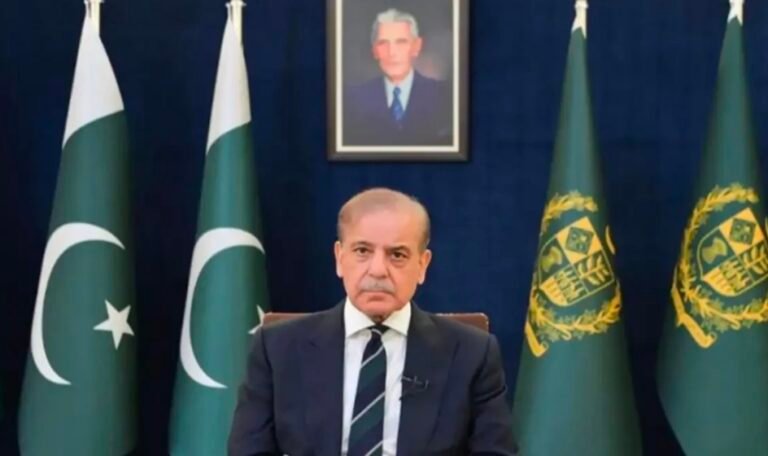
He congratulated the successful candidates and assured the elected representatives of the federal government’s support for the development of Azad Kashmir.If Nawaz Sharif’s message represented the vision, Shehbaz Sharif’s political personality represents implementation.His reputation for administrative activism and his emphasis on development suggest that the challenge now is to convert political commitments into measurable outcomes. Roads must be built, hospitals must function, educational institutions must improve, tourism must expand and employment opportunities must be created.For the people of Azad Kashmir, the value of political promises will ultimately be measured not by speeches but by visible change in their daily lives.Maryam Nawaz’s participation added another dimension to the gathering.Her presence was not only that of the Chief Minister of Punjab. She also represented a political generation that has inherited a longstanding relationship between the Sharif family and the people of Azad Kashmir.Her message of congratulations and encouragement to the successful candidates, as well as her recognition of those who kept the party’s flag flying in difficult circumstances, reinforced the sense that the party’s workers are part of a larger political family.The emotional character of the gathering was particularly evident in the way the leadership brought victorious and unsuccessful candidates together rather than allowing electoral results to divide them.The presence of senior federal and party leaders further enhanced the importance of the meeting. Deputy Prime Minister and Foreign Minister Senator Muhammad Ishaq Dar, National Assembly Speaker Sardar Ayaz Sadiq, former Punjab Chief Minister Hamza Shehbaz Sharif, Federal Minister and PML-N Secretary General Professor Ahsan Iqbal, Defence Minister Khawaja Muhammad Asif, Minister for Parliamentary Affairs Dr Tariq Fazal Chaudhary, Minister for Kashmir Affairs Engineer Amir Muqam, Prime Minister’s Adviser on Political Affairs Rana Sanaullah, Senator Pervaiz Rashid, Senator Talal Chaudhary, Senator Anusha Rahman, Special Assistant Rashid Nasrullah and other senior leaders and election coordinators participated in the gathering.
Among the speakers were election campaign team captain Engineer Amir Muqam, Rana Sanaullah, PML-N AJK President Shah Ghulam Qadir, former AJK prime minister Raja Muhammad Farooq Haider Khan, Mushtaq Minhas, Chaudhry Tariq Farooq, Chaudhry Muhammad Saeed, Barrister Iftikhar Gilani and Engineer Mohsin Aziz.Shah Ghulam Qadir expressed concern over the intellectual and political confusion prevailing in Azad Kashmir and emphasized the need to address it. Raja Muhammad Farooq Haider Khan and Mushtaq Minhas strongly articulated the concerns and aspirations of the people of Poonch. Chaudhry Tariq Farooq, meanwhile, assured the gathering that the incoming government would work to address the frustrations and grievances of the people of Poonch.The significance of this broad participation should not be underestimated. It presented the PML-N’s central and Azad Kashmir leadership not as separate political entities but as parts of one political structure facing a common responsibility.Particular attention was given to the seven constituencies of Poonch and Sudhnoti where the electoral process remains to be completed.The message to candidates and workers in these constituencies was clear: they are not alone.
The party leadership remains engaged, and the remaining electoral phase will receive the same political and organizational attention as the earlier stages.This reassurance is particularly important because political attention can sometimes shift immediately after an election phase has been completed. The Murree meeting conveyed the opposite message. The remaining constituencies remain an integral part of the larger political process.For the candidates and workers preparing for the final phase, that assurance carries both political and psychological significance.Ultimately, however, the real test for the PML-N will not be the size of its electoral victory. It will be what it does with that victory.The people of Azad Kashmir need a new development compact.They need roads that remain usable throughout the year, hospitals that provide modern treatment, educational institutions capable of preparing young people for a competitive world, tourism infrastructure that converts natural beauty into sustainable economic opportunity, and policies that create employment rather than forcing young Kashmiris to leave their homes in search of livelihoods.Development must not remain concentrated in a few urban centres. It must reach Muzaffarabad, Poonch, Sudhnoti, Mirpur, Bagh, Haveli, Neelum and Bhimber alike.The ultimate objective should be to restore public confidence—to make an ordinary Kashmiri feel that government understands his or her problems, listens to grievances and is prepared to act.Perhaps that is what made the Murree gathering memorable.It brought together victory and defeat, politics and reconciliation, leadership and workers, the federal government and Azad Kashmir’s political representatives.Nawaz Sharif’s message carried the warmth of an elder statesman determined to keep his political family together. Shehbaz Sharif brought the urgency of an administrator eager to translate commitments into action.
Maryam Nawaz brought the emotional connection of a new generation of leadership.Together, their messages amounted to more than political speeches.They constituted a call for unity after division, reconciliation after confrontation and development after disappointment.Azad Kashmir needs precisely such a political moment.Its mountains are not merely geographical formations; they are symbols of history and sacrifice. Its valleys are not merely landscapes; they represent generations of aspirations and memories. Its people have maintained a deep emotional attachment to Pakistan across generations.Such a relationship requires more than budgets. It requires trust.It requires more than projects. It requires ownership.And it requires more than political slogans. It requires delivery.The Murree meeting therefore deserves to be remembered not simply as another gathering of the PML-N parliamentary party, but as an occasion on which the party’s central leadership attempted to redefine the political conversation around Azad Kashmir—from electoral rivalry to reconciliation, from grievance to governance, and from political competition to development.The elections may determine who occupies the seats of power. But history will judge the leadership by what it does with that power.
For Azad Kashmir, the hope is that this new political chapter will be measured not merely in seats won, but in schools built, hospitals improved, roads completed, tourists attracted, young people employed and communities brought closer to the opportunities of a modern economy.That would be the most meaningful tribute to the mandate received—and the most convincing proof that politics can still become an instrument of public service.The Murree gathering may have been a political meeting. But its deeper message was a promise: keep faith after defeat, preserve dignity in disagreement, remain united in politics, and place the future of Azad Kashmir above the politics of the moment.