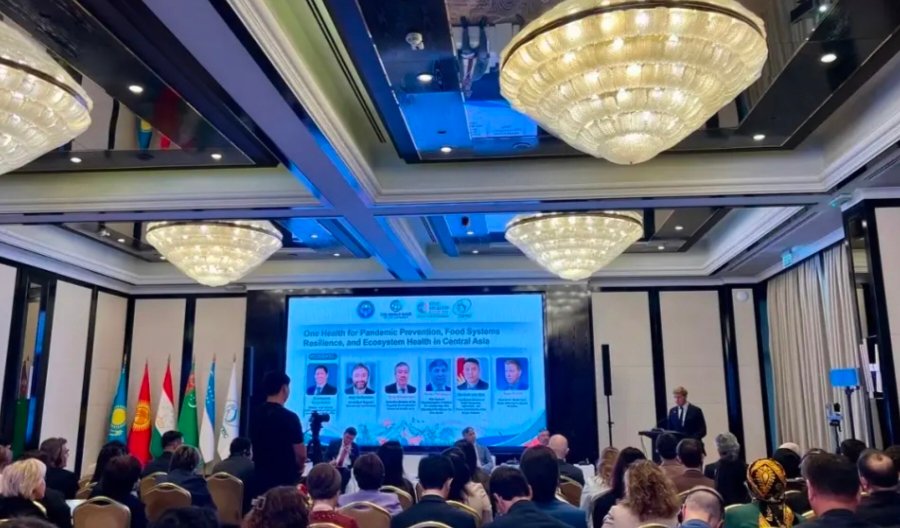

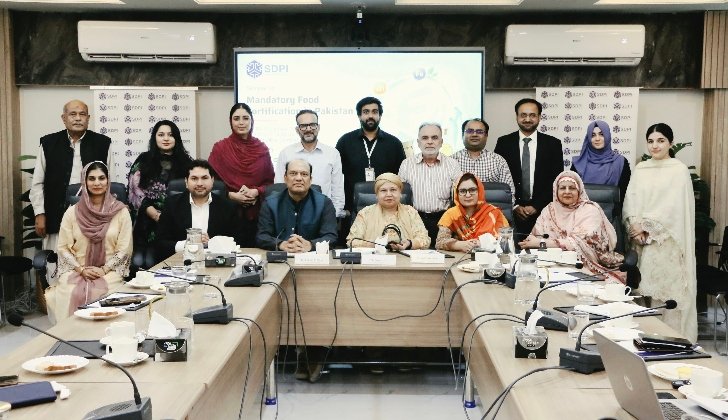
ISLAMABAD (14 September 2026): Highlighting the scale and multidimensional nature of nutrition challenge as well as status of fortification legislation, experts at a seminar said that around 63 per cent of Pakistan’s population could not afford a minimum healthy diet in 2025 thus placing the country at106th out of 123 countries on the 2025 Global Hunger Index. The seminar, titled: ‘Mandatory Food Fortification in Pakistan’, was organized by Sustainable Development Policy Institute here on Monday. Experts said national data indicate that 40 per cent of children under five remain stunted, alongside widespread deficiencies in iron, zinc, vitamin A, and vitamin D among women and children.
They also noted that food fortification is a cost-effective public-health intervention.SDPI Executive Director Dr Abid Qaiyum Suleri said approximately 25 per cent of the Pakistani population is food insecure. He stressed the importance of advocacy, legislation, policymaking and consensus-building in addressing the challenge and translating nutrition concerns into sustained policy action.Highlighting the lack of dietary diversity at the household level and limited intake of essential minerals and nutrients, he emphasized that a balanced diet is essential, while cultural and economic factors often make it difficult for households to maintain balanced diets. He discussed differences in dietary practices across provinces, including the balance between plant-based and animal-based foods, and stressed the importance of improving children’s eating habits from an early age. Discussing the gender dimension of nutrition, he said nutrition outcomes are influenced by household practices, access to food, and wider social and economic factors, therefore, gender considerations should be incorporated into nutrition policies and interventions.
Dr Shahzad Ali Khan, Vice-Chancellor of Health Services Academy, stressed the need for using research, organizational and political evidence to build a stronger case for mandatory action.Dr Khan emphasized the importance of local leadership because local leaders can have high levels of acceptance and influence within communities. He called for greater engagement with civil servants, politicians and senior government authorities so that decision-makers understand the scale and consequences of micronutrient deficiencies. sMs Farrah Naz, Country Director of GAIN, emphasized the importance of identifying and documenting micronutrient deficiencies and making these challenges more visible to policymakers. She described this as a process of “breaking invisibility” so that the scale of nutrition problems is clearly understood at higher levels of decision-making.Ms. Naz also stressed the need for higher-level political commitment and highlighted oil and wheat fortification as important areas for policy attention.
She noted that strengthening these interventions requires seriousness towards legislation, implementation, monitoring, quality control, industry compliance and political commitment.Dr Amir Saleem, a physician in Islamabad, said limited dietary diversity can leave gaps in essential nutrients and noted the importance of nutrients associated with foods such as fish, including omega oils, in relation to health and cognitive development.Discussing nutrition from economic, food-security, regional-disparity and awareness perspectives, he stressed the need for changing eating patterns among children, including skipping breakfast and not taking healthy lunch to school.Zameer Haider, National Technical Advisor, LSSF, Nutrition International, highlighted Pakistan’s experience with successful salt and edible-oil fortification and stressed the need to learn from those examples. He noted that Nutrition International is working across more than 100 districts on oil and salt iodization and has supported capacity building among wheat mills.He emphasized that passing legislation is not the same as achieving effective implementation. He also stressed the need to strengthen government regulatory capacity, address the affordability of fortified products and ensure that people who depend on informal or semi-packaged foods are not left behind.Muhammad Shahbaz Sharif, Food Safety & Quality Professional at World Food Programme, emphasized that mandatory fortification must be accompanied by practical solutions for sustainability, implementation and scale.
He highlighted the need for a stakeholder platform where government, development partners, academia, industry and other relevant actors can share reports, discuss challenges and identify solutions.He highlighted implementation needs beyond large-scale mills, particularly the chakki sector. He noted that Gilgit-Baltistan has 56 mills, with microfilters installed in 31, while AJK has 11 mills with 13 microfilters already installed. He also referred to an estimated 70,000 chakkis, noting that a large share of the population depends on chakki-based flour and that only a limited number of chakkis are currently being supported with the required equipment.Ms Saifa Waris, Project Assistant at SDPI, in her detailed presentation, provided an overview of mandatory food fortification in Pakistan.
She said nutrition challenge is not only about food availability but also about affordability and access to nutritious foods. She said people may consume sufficient calories, but still lack essential vitamins and minerals, making hidden hunger a critical concern. She highlighted stunting, wasting, underweight and micronutrient deficiencies among children, women and adolescent girls, drawing on the National Nutrition Survey 2018 and stressed the need for more frequent and timely national nutrition data. She said fortification only works when the system works, noting the importance of correct dosage, proper management of micronutrient premixes, product testing and producer monitoring.Her presentation also reviewed Pakistan’s fortification journey, including early legislation concerning oil and ghee fortification in the 1960s, the 2011 Gilgit-Baltistan Salt Iodization/IDD Control Act, comprehensive legislation enacted in Sindh, Balochistan and Khyber Pakhtunkhwa during 2021–2022, and the Federal Food Fortification Bill introduced in 2025 which remains pending.