
Rapid conversion of green spaces into commercial developments, unchecked discharge of untreated industrial effluents into the sea, rampant tree-cutting, and weak enforcement of environmental laws are pushing Pakistan’s major cities towards an ecological disaster and worsening the climate emergency, environmental experts, academics, business leaders and public representatives warned on World Environment Day.
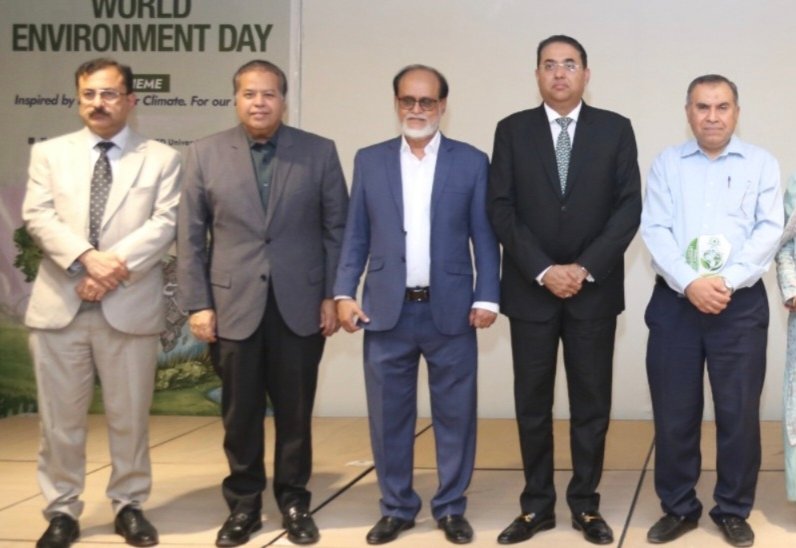
The concerns were voiced at a seminar organised by the National Forum for Environment & Health (NFEH) in collaboration with United National Environmental Programme and NED University of Engineering & Technology at its City Campus in Karachi to mark World Environment Day.Speaking as the guest of honour, President of the Karachi Chamber of Commerce & Industry (KCCI), Muhammad Rehan Hanif, assured participants that the KCCI would not support any industry or commercial establishment found violating environmental laws.He said the KCCI would fully support government efforts to enforce environmental regulations governing industrial and commercial activities in Karachi.
Industries, he stressed, must ensure that untreated effluents are not discharged into the environment, while businesses should strictly comply with environmental laws and conduct their operations in a manner that does not harm the city’s ecological balance.“The KCCI will always stand with the relevant government authorities and agencies whenever action is taken against polluting industries and businesses whose irresponsible practices contribute to environmental degradation in Karachi,” he said.Hanif called for strict legal action against those involved in pollution, littering, and reckless waste disposal. He regretted that society often fails to support administrative authorities when they take action against people responsible for littering and improper waste disposal, despite the damage such practices cause to the city’s beauty and environment.
The KCCI president said environmental compliance had become essential for industries seeking access to international markets, as products manufactured through environmentally harmful practices faced increasing restrictions in developed countries. He assured the audience of KCCI’s full support for initiatives aimed at improving environmental compliance across industries in Karachi.In his keynote address, Prof Dr Noman Ahmed, Pro Vice-Chancellor of the NED University and a renowned architect and urban planner, warned that unchecked commercialisation and unlawful changes in land-use status were threatening the very existence of parks, public open spaces and greenbelts along major roads in Karachi.He said encroachments on green spaces and amenity land, coupled with large-scale tree cutting, had intensified the climate crisis and contributed to extreme weather events, including deadly heatwaves. Dr Ahmed noted that the problem was not limited to Karachi. Lahore, once known as the “City of Gardens”, was also rapidly losing its green cover and ecological character due to unchecked urbanisation.Referring to the recent attempt to carve out residential plots from Karachi’s Hill Park, he said the incident highlighted the growing threat facing urban green spaces. “If a major park located in the heart of Karachi can face such brazen encroachment, one can easily imagine the risks confronting green spaces situated in the city’s outskirts,” he observed.
Dr Ahmed also expressed concern over the deteriorating condition of the Arabian Sea, saying Karachi’s marine and fisheries resources were invaluable environmental assets that were increasingly threatened by plastic pollution and untreated industrial discharges.“A recent image released by scuba divers near Keamari Port showed the seabed covered with plastic bags, reflecting the alarming scale of marine pollution in our city,” he said.Member of the Sindh Assembly Rehan Bandukda criticised ongoing high-rise developments along Karachi’s coastline on reclaimed land, questioning whether adequate planning had been undertaken to manage drainage and sewage systems so that the marine environment remained protected.He called for strict year-round accountability of provincial environmental authorities regarding their plans, commitments and announcements aimed at safeguarding urban ecology and the environment.Managing Director of the Sindh Solid Waste Management Board (SSWMB), Tariq Ali Nizamani, informed participants about the adoption of modern technological, information technology and communication-based solutions to upgrade waste management operations in Karachi and other urban centres in Sindh in accordance with international environmental standards.He said the SSWMB, in collaboration with municipal agencies and administrative authorities, had successfully carried out the disposal of offal and animal waste in Karachi during the recent Eidul Azha operations.NFEH President Muhammad Naeem Qureshi, who also serves as Convener of the FPCCI Standing Committee on Sustainable Development Goals (SDGs), reaffirmed his organisation’s commitment to working closely with government agencies, industries and businesses to undertake large-scale tree plantation campaigns and prevent deforestation in major urban centres.He urged the Federation of Pakistan Chambers of Commerce and Industry (FPCCI), KCCI and other chambers across the country to organise awareness programmes and training workshops to help industries comply with international environmental standards.
He also called for strict enforcement of environmental laws against illegal tree cutting, industrial pollution and marine contamination.NFEH Secretary-General Ruqiya Naeem, Vice-President Engineer Nadeem Ashraf, senior ecologist Rafiul Haq, environmental journalist Shabina Faraz, and other speakers stressed the importance of involving educational institutions in nationwide environmental awareness campaigns.They said educating young people about environmental stewardship was essential to protecting natural resources, preserving ecological balance and mitigating the devastating impacts of climate change for future generations.