
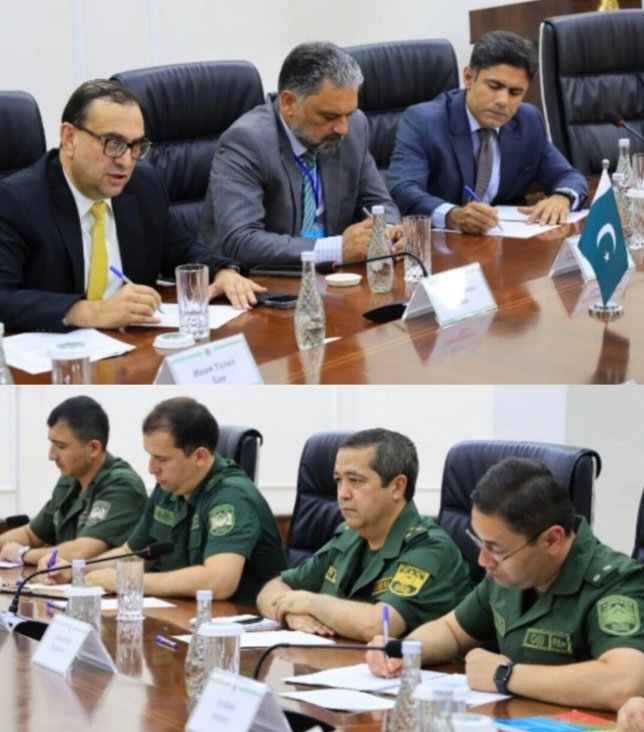
ISLAMABAD, Aug 2: Pakistan and Uzbekistan have agreed to further enhance customs cooperation by expanding digital connectivity and strengthening the exchange of customs information to facilitate regional trade and improve border security.The understanding was reached during the 11th Policy-Level Meeting of the United Nations Office on Drugs and Crime (UNODC)–World Customs Organization (WCO) Passenger and Cargo Control Programme (PCCP/IREN), held in Tashkent, Uzbekistan.Pakistan was represented by Member Customs (Operations) Syed Shakeel Shah of the Federal Board of Revenue (FBR), along with Director General Reforms and Automation, Pakistan Customs, Muhammad Imran Khan Mohmand.
The meeting brought together senior customs officials from across the region to discuss practical measures for making cross-border trade more secure, efficient and technology-driven. Participants exchanged views on expanding the use of Artificial Intelligence (AI) in risk management, mutual recognition of Authorized Economic Operator (AEO) programmes, regulatory cooperation and stronger public-private partnerships to support legitimate trade while preventing smuggling and other illicit activities.The participating countries also agreed to establish technical working groups to prepare draft protocols in priority areas aimed at improving regional trade, customs coordination and digital integration.On the sidelines of the meeting, the Pakistani delegation held detailed talks with the First Deputy Chairman of the Customs Committee of Uzbekistan.
The two sides reviewed progress under existing cooperation mechanisms and explored opportunities to expand collaboration in areas including transit cargo tracking, National Targeting Centres, AI-based risk management, customs digitalisation, intelligence-led enforcement and information sharing.During the discussions, Syed Shakeel Shah said Uzbekistan is the first country with which Pakistan has launched advance customs information exchange through the Pakistan Single Window (PSW) for both imports and exports. He described the initiative as a significant step towards modernising customs procedures and strengthening bilateral trade.Both countries also agreed to examine the inclusion of transit trade information in the existing digital system.
Officials said the move would help speed up customs clearance, improve the quality of data exchange, strengthen border controls and make regional trade more efficient.The two sides reaffirmed their commitment to expanding customs cooperation through greater digital connectivity, coordinated border management, adoption of modern technologies and regular exchange of best practices. Pakistan Customs also reiterated its resolve to continue modernising its systems through innovation and international cooperation to promote trade while ensuring effective enforcement and secure borders.