
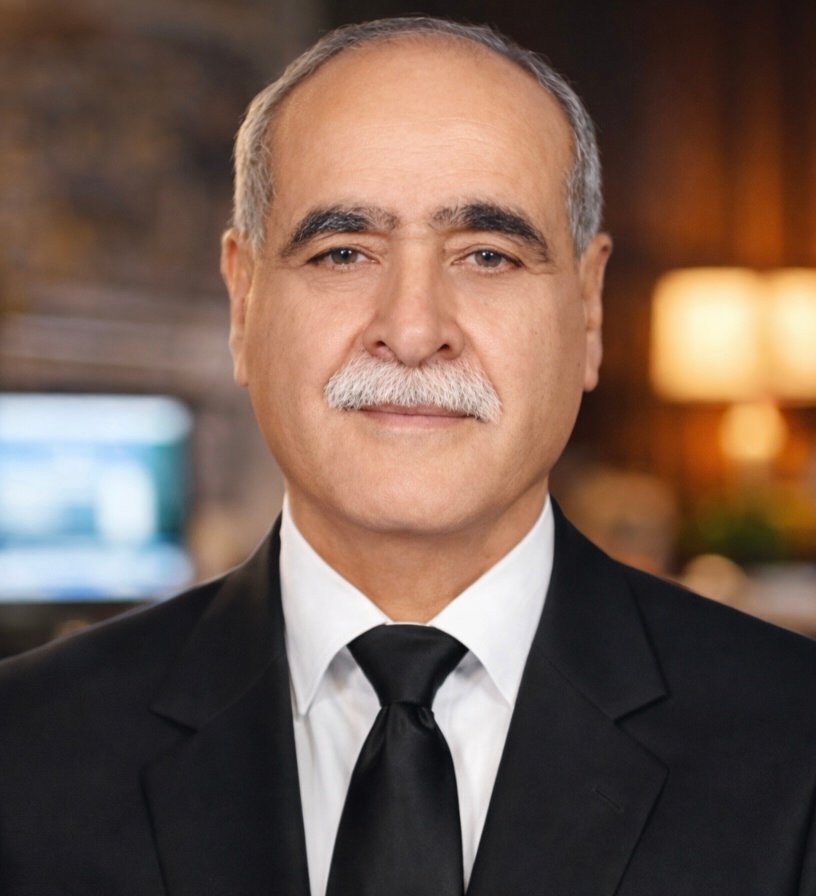
The Middle East is once again gripped by profound uncertainty, anxiety and strategic unease. Rising military and intelligence operations by the United States and Israel against Iran have pushed the region to the edge of a potentially wider conflict. While no formal declaration of war has been made, a dangerous mix of strikes, retaliatory actions, covert operations and harsh diplomatic rhetoric has created an atmosphere so tense that any miscalculation or provocation could ignite a full-scale conflagration.In this delicate and decisive moment, Pakistan’s Senate heard a powerful and principled address from Deputy Prime Minister and Foreign Minister Senator Ishaq Dar. Far from being routine parliamentary rhetoric, his speech articulated Pakistan’s national position with clarity and delivered a firm, reasoned message to the international community on behalf of a responsible nuclear-armed state.Senator Dar began by stating unequivocally that Pakistan rejects aggression against any sovereign nation on principle. He reminded the House that the international system is not built on the unrestrained use of power but on respect for laws and treaties.
The very spirit of the United Nations Charter, he emphasised, demands that states honour one another’s sovereignty and territorial integrity. Any departure from this fundamental principle risks plunging the global order into chaos.To help understand the roots of the present crisis, Dar took the Senate back to the 1979 Iranian Revolution. Under the leadership of Ayatollah Ruhollah Khomeini, the revolution dramatically transformed Iran’s foreign policy. The severing of diplomatic ties with the United States and open confrontation with Israel laid the foundation for a strategic rivalry that has persisted for decades. Subsequent developments — Iran’s nuclear programme, sweeping economic sanctions, cyber attacks and clandestine operations — have only deepened mutual distrust. Today’s heightened tensions, Dar observed, are the direct continuation of this long and bitter historical trajectory.The speech also highlighted the complex dynamics of Gulf politics and the regional balance of power. Iran’s significant influence in Syria, Iraq, Lebanon and Yemen has established it as a major regional player. Yet the same influence has fuelled proxy conflicts and ideological rivalries that keep the region in a state of permanent friction. Iran’s competition with Saudi Arabia, the war in Yemen and the security concerns of Gulf states have further complicated the crisis. Pakistan, Dar stressed, attaches equal importance to the stability of all brotherly Muslim countries and has no desire to see the region divided along factional lines.Turning to more recent events, the Deputy Prime Minister condemned the latest attacks on Iranian territory and the targeted killings of senior military and scientific figures. Such internal infiltration and covert networks, he warned, pose a grave threat to any state’s security and national morale. When public confidence in state institutions is undermined, the consequences extend far beyond the military sphere to damage economic, social and political stability. Pakistan, he said, stands in sincere solidarity with the Iranian leadership and people and has strongly denounced every action that threatens regional peace.In the Senate, Dar made it clear that Pakistan had immediately condemned the strikes on Iran and described them as a violation of international law. Islamabad has consistently called for de-escalation, restraint and the restoration of dialogue through the Organisation of Islamic Cooperation (OIC) and other global forums. Multiple diplomatic contacts have been initiated with various countries to prevent the situation from spiralling out of control. War, he reminded the House, is never a solution; it only multiplies problems many times over.Dar paid tribute to Prime Minister Shehbaz Sharif’s proactive diplomatic efforts.
The Prime Minister has engaged world leaders directly, presenting Pakistan’s balanced and principled stance. Pakistan, Dar underlined, has no interest in bloc politics. Its sole objective is to play a constructive role in promoting peace and stability in the region. At the military level, under the leadership of Chief of Army Staff General Syed Asim Munir, Pakistan is closely monitoring developments to safeguard national security.A significant portion of the address was devoted to the potential economic fallout. If the current tensions escalate into a prolonged conflict, the consequences for the global economy would be severe. Any disruption to oil flows through the Strait of Hormuz could trigger a dramatic surge in energy prices. For import-dependent economies like Pakistan, the result would be spiralling inflation, widening trade deficits and acute pressure on foreign-exchange reserves. Dar urged the international community to move beyond mere statements and take concrete steps to reduce tensions.He also warned that when state policies are driven by expansionist ideologies, the risk of conflict inevitably rises. Strategies rooted in the arrogance of power may deliver short-term gains, but their long-term legacy is often generational instability. Pakistan’s position remains crystal clear: respect for borders, mutual sovereignty and adherence to international law are the only foundations for lasting peace.In a broader reflection, Dar pointed to two countries whose policies and expansionist ambitions have repeatedly brought global peace to the brink. On one side is Israel, where the vision of a “Greater Israel” has kept the Middle East in perpetual turmoil. Territorial expansion backed by military superiority has destabilised not only Palestine but the entire region. Many observers believe Israel has succeeded in aligning even a superpower like the United States with its strategic priorities, thereby distorting the global balance of power.On the other side, the ideology of “Akhand Bharat” in India now poses a persistent challenge to peace in South Asia.
The pursuit of regional hegemony, pressure on neighbours and an internal narrative of aggressive nationalism are pushing the subcontinent towards greater instability. When state policy becomes entangled with ideological expansionism, diplomacy weakens and confrontation strengthens.Senator Dar’s address in the upper house was therefore a clear signal that Pakistan will neither endorse any expansionist agenda nor allow itself to become a tool in great-power rivalries. Islamabad will continue to champion the path of peace, balance and dialogue. History, he reminded listeners, proves that the arrogance of power ultimately breeds destruction, while justice and moderation alone guarantee enduring stability.Dar also issued a direct appeal to Iran: it must refrain from actions against other Islamic countries. Any such moves, he cautioned, would not reduce tensions but risk widening the theatre of war. He further emphasised that respect for the Pakistan-Saudi defence agreement is the responsibility of all parties involved in the conflict.Prime Minister Shehbaz Sharif has decided to brief all parliamentary opposition parties on the evolving situation so that a unified national position can be maintained. At this critical juncture, Pakistan — government and opposition alike, across every school of thought — must demonstrate complete solidarity.
Senator Ishaq Dar’s speech was more than a parliamentary intervention; it was a statesmanlike reminder that in an increasingly volatile world, responsible nations must uphold the rule of law, reject aggression and work tirelessly for de-escalation. Pakistan’s message is unambiguous: peace is not merely desirable — it is the only viable path forward for the region and the world.