
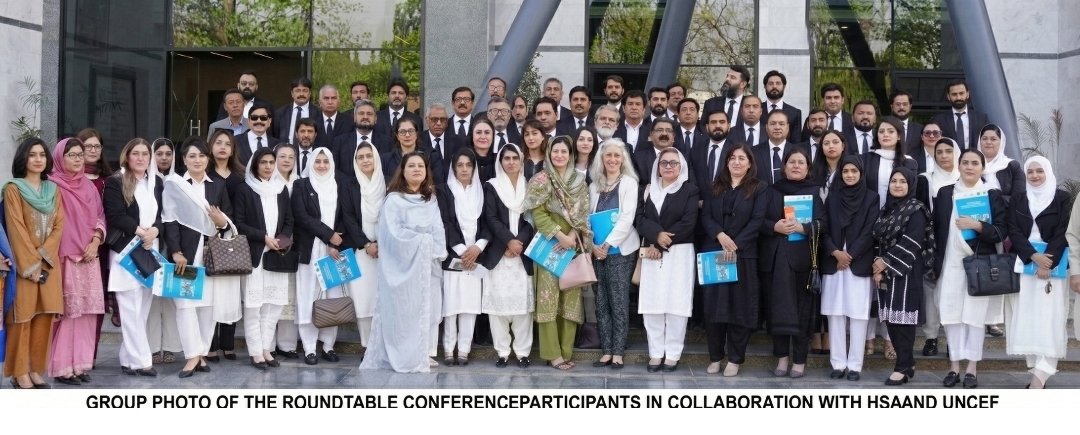
Islmabad :The government, judiciary, and health experts have sounded the alarm over Pakistan’s severe early childhood development and malnutrition crisis, calling for the immediate consolidation and enforcement of fragmented laws.The high-level roundtable conference, titled “From Fragmented Policies to Enforceable Rights: Legal Reform for Early Childhood Development and Nutrition in Pakistan” was organized by the Health Services Academy in collaboration with UNICEF at the Islamabad High Court Bar Association.
Justice Syed Muhammad Anwar of the Federal Shariat Court, while addressing the participants, described the non-implementation of existing laws as a national tragedy. He argued that the current systemic fragmentation has significantly weakened the state’s ability to protect infant health.Justice Anwar specifically called on regulatory bodies to become more proactive in curbing the illegal promotion of breast milk substitutes, stressing that the promotion of breastfeeding is not merely a health concern but a profound constitutional and Islamic obligation.The scale of the crisis was further highlighted by UNICEF Representative Pernille Ironside, who presented data showing that 40 percent of Pakistani children suffer from stunting due to chronic malnutrition. She warned that the country’s future stability depends entirely on the well-being of its youngest citizens, urging the government to move beyond symbolic targets and instead treat child nutrition as a set of “enforceable rights.”Supporting this view, Noreen Bano, Interim Chairperson of the National Commission on the Status of Women, pointed out that health goals cannot be met without providing mothers with supportive environments, such as daycare centers and private breastfeeding corners in both public and private workplaces.
The conference concluded with a series of urgent recommendations, including the immediate restoration of Infant Feeding Boards to tighten monitoring and the introduction of strict disciplinary actions against law violators. Participants demanded a centralized mechanism to synchronize federal and provincial policies, ensuring that child nutrition is recognized as a fundamental legal right. The consensus among the attendees was clear: without these structural reforms, the next generation remains at risk of preventable physical and cognitive disabilities.