
Investigative story by Imrana Komal
In today’s Pakistan, rising petrol prices have become more than just an economic issue—they are a daily struggle shaping the lives of millions. With every increase in fuel costs, the ripple effects spread across transportation, food prices, employment, and overall quality of life. For a country like Pakistan, where a large segment of the population depends on daily wages, this burden is especially heavy.Petrol is not just fuel; it is the backbone of mobility. From office workers commuting long distances to laborers traveling for work, and from school vans to public transport, everything depends on it. When prices rise, transport fares increase immediately. This directly impacts low- and middle-income families who already struggle to make ends meet.
A simple trip to work or school becomes a financial decision rather than a routine activity.Moreover, the increase in petrol prices triggers inflation across all sectors. Goods transported from farms to markets become more expensive, leading to higher food prices. Vegetables, fruits, flour, and daily essentials all become costlier. The common citizen, whose salary often remains unchanged, is forced to compromise on nutrition, healthcare, and education.It should be noted that as of April 2026, the ongoing war in the Middle East (including the involvement of Iran, Israel and the United States) has severely affected the global oil supply lines, the direct effects of which have been manifested in the form of a historic increase in the prices of petroleum products in Pakistan.
Tensions in the Middle East, especially the direct conflict between Iran and Israel, have left the region in a geostrategic crisis. This is why the disruption in oil supply due to military operations near the Strait of Hormuz has led to a disruption in the global supply of oil, which is being described as the largest supply disruption in history. While crude oil prices in the global market have exceeded $ 100 per barrel. Similarly, the price of petrol in Pakistan has increased historically in April 2026.It is obvious that the prices of petroleum products in Pakistan have been increased by more than 50 percent, after which the price of petrol had crossed Rs 458 per liter, while diesel reached Rs 520 per liter. In such a situation, the government’s stance is not hidden from anyone.
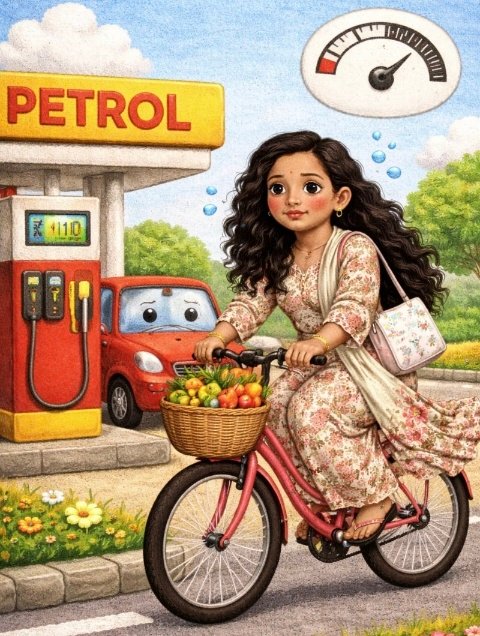
The government has blamed the Middle East war and prices in the world market for the increase in petroleum prices. While the temporary reduction has been made, after a strong public response, the Prime Minister also announced a temporary reduction of up to Rs 80 per liter in the price of petrol. However, this reduction is less than a grain in the camel’s mouth. Due to high petrol prices, there has been a storm of inflation in the country and an increase in transport costs, which is affecting the poor and middle class the most.The situation is often linked with international pressures and agreements with institutions like the International Monetary Fund, where subsidy reductions and fuel price adjustments are part of broader economic reforms. While these policies may aim to stabilize the economy, their immediate impact is deeply felt at the grassroots level.Socially, rising petrol prices widen inequality. The wealthy continue their lifestyles with minor adjustments, while the poor are pushed further into hardship. Public frustration grows, and trust in economic management weakens. In urban centers like Islamabad and Rawalpindi, traffic congestion still exists, but many motorcycles and cars are now used less frequently, reflecting a silent economic slowdown.In this context, the phrase “Come on, sit on bicycle” becomes both symbolic and practical. It represents a shift towards simpler, more sustainable living.
Bicycles are not only cost-effective but also environmentally friendly. Promoting cycling culture can reduce fuel dependency, ease traffic congestion, and improve public health.However, this shift requires structural support. The government must invest in safe cycling lanes, awareness campaigns, and urban planning that encourages alternative transport. Without proper infrastructure, asking people to switch to bicycles remains an ideal rather than a realistic solution.Ultimately, rising petrol prices are not just about numbers—they reflect deeper economic challenges and social inequalities. While bicycles may offer a partial solution, the real need is for balanced policies that protect the vulnerable while steering the country towards sustainable growth.In the end, the call to “sit on a bicycle” is not just about transport—it is about adapting, surviving, and rethinking how society moves forward in difficult times.