

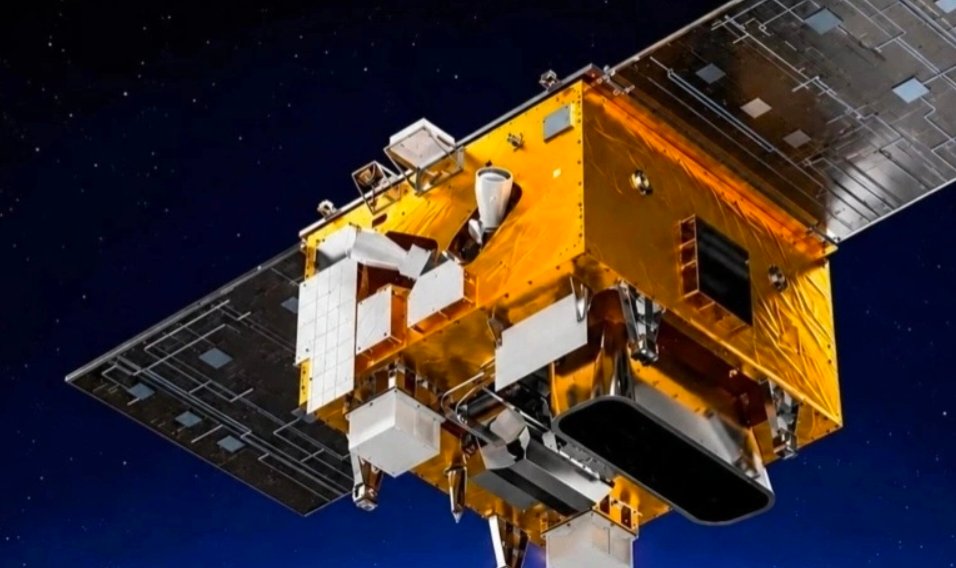
Tashkent–Beijing Space Cooperation Reaches New Heights as Joint Satellite Mission Advances Agriculture, Environment and Disaster Monitoring
Uzbekistan’s “Samarkand-2028” satellite has been successfully launched from a sea-based launch platform off the coast of Shandong Province, China, marking a major milestone in the country’s growing space ambitions.The satellite was jointly developed and assembled in cooperation with China’s STAR.VISION Aerospace Group Limited, reflecting the strengthening scientific and technological partnership between Uzbekistan and China.
According to Uzbekistan’s Ministry of Digital Technologies, specialists from the Uzbekcosmos Agency developed an advanced artificial intelligence module for the mission, enabling hyperspectral data processing directly onboard the satellite. The technology will improve data transmission efficiency, accelerate analysis, and expand the use of artificial intelligence in space applications.The “Samarkand-2028” mission is designed to support a wide range of sectors, including smart agriculture, environmental protection, natural resource monitoring, water management, disaster risk reduction, and urban planning.
The mission is considered one of the largest international space projects in Uzbekistan’s history and represents a significant step forward in the development of the country’s national space program, while further deepening space and innovation cooperation between Uzbekistan and China.